How to Sell a Meth-Contaminated or Drug House in Washington
Sell a meth-contaminated house in Washington: RCW 64.44 unfit-for-use orders, the 1.5 µg standard, Form 17 disclosure, cleanup costs, and the cash buyer path.
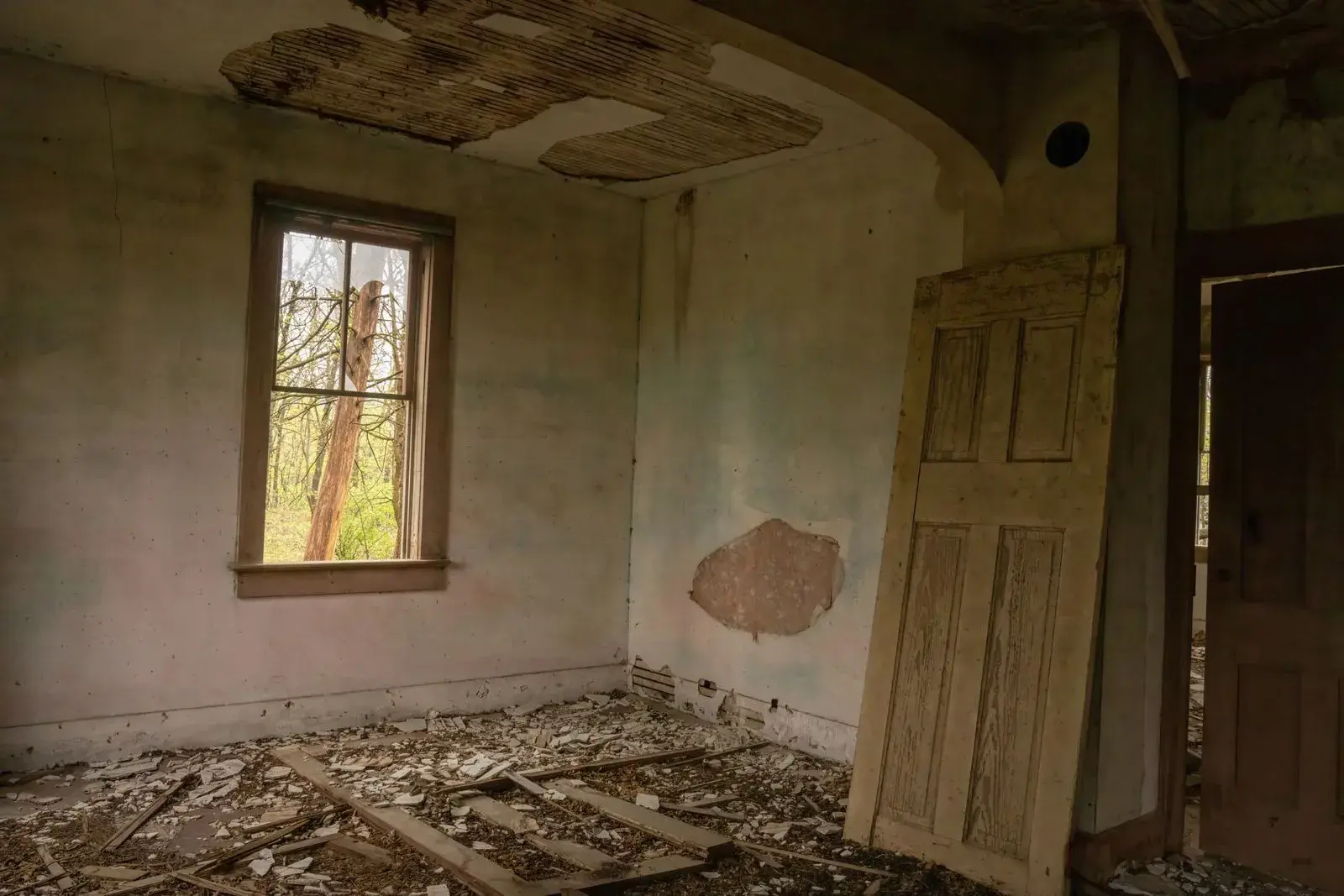
You can sell a meth-contaminated house in Washington, and you do not have to decontaminate it first. Washington's Contaminated Properties law, RCW 64.44, restricts who can occupy or enter a posted property, but it does not prohibit transferring title. What it does is attach the cleanup obligation to the property itself, record the health officer's order with the county auditor, and put the entire cost of certified decontamination on whoever owns the house when the work gets done.
That single fact shapes every option you have, whether the house is in Seattle, Tacoma, Everett, Spokane, or a rural county with one health inspector. If you decontaminate under WAC 246-205 and get a release recorded, you can list to any buyer. If you sell as-is, your buyer inherits the order, which means no lender will fund the purchase and your realistic pool is cash buyers who already know how the Department of Health process works.
This guide covers what actually triggers the law, the 1.5 microgram clearance standard, what Form 17 requires you to disclose, real decontamination costs, and a step-by-step path to closing either way.
The short version: Washington does not force you to clean up a drug house before selling it, but it forces someone to before anyone can live there again. Disclose what you know on Form 17 (section 7.J asks directly about illegal drug manufacturing), get the health officer's order and any test results in hand, and then decide between a five-to-eight-month decontamination-and-list path or a 7-to-14-day cash sale where the buyer takes on the cleanup.
What Counts as a "Meth House" Under Washington Law
The phrase covers three very different situations, and the law treats them differently.
Which bucket you are in matters because the first one comes with a recorded order, a prohibition on entering the property, and a health officer who controls the timeline. The second and third are private problems until someone tests.
Washington's Meth Problem Moved From Labs to Living Rooms
The reason this distinction matters in 2026 is that Washington's contamination profile changed. Home labs collapsed after federal pseudoephedrine limits took effect, and imported meth replaced them. The Department of Ecology's clandestine lab cleanups peaked at 1,890 in 2001 and fell to 184 by 2008, according to Seattle Times reporting on the state's data. Meanwhile, use kept climbing: Washington Department of Health data shows 1,908 overdose deaths involving psychostimulants in 2023 and 1,818 in preliminary 2024 counts, with psychostimulants (mostly meth) involved in 55 percent of all 2023 overdose deaths statewide.
For a seller, that means the house you are dealing with is far more likely to be a rental where a tenant smoked for three years than a kitchen with a hot plate and lithium strips. The cleanup science is similar. The legal posture is not, and neither is the price.
What Happens When a House Is Posted Under RCW 64.44
If law enforcement reported the property and the health officer found contamination above the state standard, here is the sequence the statute lays out. Knowing it lets you read your own situation without waiting for a return call from the health department.
The one thing the statute does not say is that you cannot sell. It regulates use and access, and it makes the decontamination obligation follow the property. If you sell a posted house as-is, the buyer steps into your shoes with the health officer. That is exactly why the buyer pool narrows to cash.
If you are simultaneously dealing with a city abatement order, code enforcement, or a condemned structure, the mechanics overlap with what we cover in selling a house with code violations in Washington and selling a condemned house in Washington. Multiple orders on one property are common with long-term drug houses.
Washington Meth Decontamination Standards (WAC 246-205)
The Department of Health writes the technical rules under RCW 64.44.070, and they live in chapter 246-205 WAC. Four numbers control whether a house gets released.
The lead, mercury, and VOC standards mostly bite on former labs, where the cooking process spreads them. The 1.5 microgram meth standard is the one that fails smoked-in rentals. DOH states that the 1.5 number "was created based on negative health effects found in people," and it is among the tighter clearance levels in the country.
Sampling is not something you can do with a hardware store kit and expect the health officer to accept. Under WAC 246-205-531, samples used for clearance must be collected by Department of Ecology staff, DOH-certified clandestine drug lab supervisors, or local health officers, using ASTM D4840 chain-of-custody procedures. Home test kits are useful for deciding whether to spend money on a real assessment. They are not evidence.
Contractors must be certified by DOH under RCW 64.44.060, which requires training, testing, and background checks for workers and supervisors, with fines up to $500 per violation for working uncertified. Certification is not cheap: WAC 246-205-990 lists a $1,116 initial fee for supervisors and $558 for workers on two-year cycles. DOH publishes a list of certified drug lab cleanup companies, and its Drug Lab Cleanup Program answers certification questions at 360-236-3385. If a contractor is not on that list, their work will not produce a release.
One gap worth knowing: Washington has no decontamination standard for fentanyl. DOH is explicit that the state's standards cover "methamphetamine, lead, mercury, and volatile organic carbons (VOCs), but not for fentanyl." A house where fentanyl was smoked can be tested and cleaned, but there is no statutory number a health officer can enforce or release against.
Do You Have to Disclose Meth Contamination in Washington?
Yes, once you know about it. Washington's seller disclosure statute, RCW 64.06.020, requires the Form 17 disclosure on residential sales, and two lines on that form apply.
The standard is actual knowledge. You are not required to test a house you have no reason to suspect, and you are not liable for contamination you genuinely did not know about. But actual knowledge is broader than a recorded order. If a tenant told you they were cooking, if the police called, if a prior buyer's inspection came back hot and the deal fell apart, you know.
Three details of the statute matter for drug houses specifically:
There is also the practical reality: a health officer's order is filed with the county auditor. Even a seller who wanted to hide a posting could not. The title search will surface it, the buyer's lender will refuse to fund, and the sale will collapse at the worst possible moment. Disclosing early is not just the legal path. It is the only path that produces a closing.
The same Form 17 logic applies to other environmental problems we see paired with drug houses, especially in older Puget Sound housing stock. If the property also has asbestos or water damage and mold, those go on the same form, and a buyer pricing a decontamination job will price those too.
How Much Does Meth Decontamination Cost in Washington?
Nationally, decontamination franchise Spaulding Decon reports that meth cleanup "jobs can range from $5,000 to $120,000, with an average of $15,000 to $20,000," and that a smoked-in house is cheaper to clear than a production site. Washington's 1.5 microgram standard pushes scope toward the upper half of those ranges, because contractors here routinely have to remove or replace anything porous that fails a wipe test rather than clean it and hope.
Here is how the budget breaks down for a typical Puget Sound single-family house.
What drives the number on a specific house:
Add restoration on top of decontamination. The contractor's job is to get the house below 1.5 micrograms, not to make it livable. Flooring, drywall, paint, cabinets, and a new furnace are a second project, and on the houses we see it is often as expensive as the decontamination itself.
Your Three Options for Selling a Meth House in Washington
Every seller ends up on one of three paths. The right one depends on cash on hand, time, and how much of the process you want to personally manage.
Option 1: Decontaminate, get the release recorded, then list
This is the path that produces the highest sale price, because once the release is recorded the house is a normal house. FHA, VA, and conventional buyers come back, and Form 17 still requires the 7.J disclosure, but a disclosed and released former lab with a recorded clearance does not scare most buyers off in a tight Puget Sound market.
The cost is time and capital. You front $30,000 to $100,000 across testing, decontamination, oversight, and restoration, carry the mortgage, taxes, insurance, and utilities for five to eight months, and then pay the normal 5 to 7 percent in commissions and closing costs. If you have the money and no urgency, this nets the most.
Option 2: Sell as-is to a cash buyer who takes on the cleanup
The buyer purchases the house with the order still attached, coordinates with the health officer, hires the certified contractor, and gets the release in their own name. You disclose, sign, and close in 7 to 14 days.
The price reflects everything the buyer is absorbing: the full decontamination and restoration budget, a contingency for failed clearance, the holding costs during the process, and a margin for the risk. A serious buyer will show you that math rather than hide it. We break down exactly how that pricing works in how cash home offers actually work, and the same logic applies to any comparison of a cash buyer versus an iBuyer versus a listing, except that iBuyers do not purchase posted properties at all.
Option 3: Demolish and sell the lot
If the structure was marginal before the contamination, certified demolition and disposal can cost less than decontamination and restoration, and a cleared lot has no order attached once the release is recorded. This works on infill lots in Seattle, Tacoma, Everett, and Spokane where land value carries the deal. It does not work on a rural parcel where the house was most of the value.
Why lenders and insurers force the issue
A posted property will not appraise, will not pass an FHA or VA inspection, and will not get a clear title commitment while the order sits on the auditor's records. Most homeowner's insurers will also non-renew or exclude a known drug lab. That is not a rule anyone chose. It is the mechanical result of a recorded unfit-for-use order, and it is why Option 2 means cash, not a financed buyer with an as-is addendum.
Step-by-Step: How to Sell a Meth-Contaminated House in Washington
Step 1: Find out exactly what you are dealing with
Pull the county auditor's records for your parcel and look for a health officer's order. Call the local health department's drug lab program: Tacoma-Pierce County Health Department publishes a current and former meth contaminated property list, and Snohomish County Health Department runs a similar program that restricts access once an order is issued. Public Health for Seattle and King County and Spokane Regional Health District each have their own contacts. If nothing is on record and you only suspect a problem, hire a DOH-certified supervisor to run an assessment before you do anything else.
Step 2: Get the order, the timeline, and permission to enter
If the house is posted, ask the health officer for a copy of the order, the decontamination timeline they set under RCW 64.44.050, and written permission for you and any buyer's representatives to enter. Without that permission, showing the house is a violation. Ask whether the department has any sampling results from its inspection. Those numbers will be the starting point for every contractor bid and every cash offer.
Step 3: Run the numbers on both paths
Get two certified contractor bids for decontamination and a rough restoration estimate. Add oversight fees, five to eight months of carrying costs, and 6 to 7 percent for commissions and closing. Compare the net to a written cash offer. The section below walks through an example. Do not skip this step: the difference between the two paths is smaller than most sellers assume once holding costs and risk are counted, and larger than most cash buyers admit when they are not.
Step 4: If you decontaminate, follow the WAC 246-205 sequence
Hire a contractor from the DOH certified list. They submit a written work plan to the health officer, who must approve it before work starts. After decontamination, a certified supervisor or the health officer collects clearance samples. The final report goes to the health officer, who has ten working days to verify compliance and may require additional testing. When satisfied, the officer records the release for reuse. Keep every document: work plan, approval, lab results, final report, and recorded release. They go in the buyer's package.
Step 5: If you sell as-is, assemble the package a real buyer needs
A legitimate cash buyer for a posted house will ask for the health officer's order, any sampling results, the contractor bids you collected, the health officer's contact, and permission to walk the property. Provide all of it up front. Buyers who do not ask for any of it are either wholesalers who plan to assign the contract to someone who will, or they have not bought a drug house before. Both are risks to your closing. If the property is a rental with people still in it, read our guide to selling a rental with tenants in Washington first, because a posted house cannot lawfully be occupied and the health officer's order overrides the lease.
Step 6: Complete Form 17 honestly and deliver it early
Answer 7.J yes if the house was a lab. Answer 10.A yes and attach the sampling results if it tested positive from use. Attach the health officer's order and any release. Deliver the form with the offer, not after inspection, so the buyer's three-business-day rescission window runs before either side spends money on escrow. Over-disclosure has never cost a Washington seller a closing. Under-disclosure has cost plenty of them a lawsuit.
Step 7: Close through escrow with the order accounted for
The title company will find the recorded order. If you decontaminated, the recorded release resolves it. If you are selling as-is, the buyer's purchase agreement should acknowledge the order, the buyer's assumption of the decontamination obligation, and the health officer's timeline. Any liens, back taxes, or code enforcement fines are paid from proceeds at closing, the same way they are in any other distressed sale. A cash close on a posted house in the Puget Sound market typically takes 7 to 14 days from acceptance.
Cash Buyer vs. Traditional Sale: The Math on a Meth House
Here is what the timeline actually looks like on each path. Every stage on the traditional side has a statutory or practical floor, which is why the total does not compress much even with a motivated contractor.
Now the money. Consider a three-bedroom rental in Tacoma's Eastside, worth about $450,000 once it is clean and updated. The tenant was arrested for manufacturing, the health officer posted the house, and the owner has a $210,000 mortgage payoff.
Read that chart honestly. The traditional path nets about $17,000 more in this example, and that is real money. What it costs to get there is roughly $73,000 in cash before you see a dollar back, seven months of carrying a house nobody can live in, and the risk that the first clearance fails or the restoration budget grows. For an owner with the reserves and no deadline, listing after decontamination is the right call. For an owner who inherited the house, is behind on the mortgage, or simply does not have $73,000 sitting idle, the cash path is not a discount. It is the only version of the sale that actually happens.
That is the honest framing on every distressed property, whether it is a drug house, a foreclosure countdown, or a house with squatters: the traditional sale nets more if you can afford to reach it.
Two Situations We See Most Often in the Puget Sound
The out-of-state landlord. An owner in Arizona has a rental in Federal Way. The property manager quit, the tenant stopped paying, and the police executed a warrant and found a small lab in the garage. The health officer posted the house, the order went on title, and the owner learned about it from a certified letter. Managing a WAC 246-205 decontamination from 1,500 miles away, through a health department and a contractor they have never met, is what pushes most owners in this position toward an as-is sale. Our guide for out-of-state landlords selling in Washington covers the logistics.
The inherited house that tests hot. Adult children inherit their parents' house in Everett. A grandson had been living in the basement for years. Nothing was ever manufactured, so no order exists, but the buyer's inspector on the first listing ran wipe samples and the basement came back well above 1.5 micrograms. The buyer rescinded, and now the heirs have actual knowledge and a 10.A disclosure on every future Form 17. With no order, they can still list, but every financed buyer's inspector will find the same numbers. Most of these families end up choosing between paying for a cleanup they did not cause or taking a cash offer that prices it in.
Local Notes: King, Pierce, Snohomish, and Spokane Counties
The state law is uniform, but the local health officer runs the process, and the counties differ in how visible and how fast they are.
We buy posted and contaminated houses across all four counties, plus Olympia, Bellingham, and the rest of the state. If the house is in Tacoma or Seattle, we have usually already worked with the health officer who will be assigned to your file.
Frequently Asked Questions
Do I have to disclose meth contamination in Washington?
Yes, if you know about it. Form 17 section 7.J asks whether the property was used as an illegal drug manufacturing site, and section 10.A asks about any other material defect. Both run on actual knowledge. The Environmental section cannot be waived by the buyer when any answer is yes, and the RCW 64.06.010 exemptions do not erase fraud claims. Any RCW 64.44 order is also filed with the county auditor and will show up in title.
Can I sell a house that tested positive for meth?
Yes. RCW 64.44 restricts use and access, not transfer. You can sell as-is to a buyer who accepts the decontamination obligation, or decontaminate first and sell to anyone. Because lenders will not fund a posted property, an as-is sale means a cash buyer.
How much does meth decontamination cost in Washington?
Roughly $5,000 to $25,000 for a smoked-in house and $20,000 to $60,000 or more for a former lab, with national jobs ranging from $5,000 to $120,000 and averaging $15,000 to $20,000 per Spaulding Decon. Add $500 to $1,500 for an assessment, about $65 per lab sample, health department oversight billed to the owner, and restoration on top.
What is Washington's meth decontamination standard?
WAC 246-205-541: methamphetamine at or below 1.5 micrograms per 100 square centimeters, lead at or below 20 micrograms per square foot, mercury at or below 50 nanograms per cubic meter of air, and VOCs at 1 part per million. There is no Washington standard for fentanyl.
Will a cash buyer purchase a house that has been posted as unfit for use?
Experienced ones do. Expect them to ask for the health officer's order, sampling results, any bids, and permission from the health officer to enter, since unauthorized entry is unlawful under RCW 64.44.040. The offer will reflect decontamination, restoration, holding costs, and clearance risk.
How long does it take to sell a meth house in Washington?
Five to eight months if you decontaminate first and list. Seven to 14 days from accepted offer if you sell as-is for cash and the buyer takes on the health department process.
What to Do Next
If your Washington house has been posted under RCW 64.44 or has tested above 1.5 micrograms, the question is not whether it can be sold. It is whether you want to fund and manage a five-to-eight-month decontamination before you sell, or hand that job to a buyer and close in two weeks.
If you have the cash reserves and no deadline, hire a DOH-certified contractor, follow the WAC 246-205 sequence, get the release recorded, and list. You will net more, and the recorded release turns a drug house back into a normal house in the eyes of every lender.
If you do not have $50,000 to $100,000 to front, if the house is out of state or inherited, or if the mortgage is already slipping, request a cash offer on the property as-is. We buy posted, contaminated, and former-lab houses across Seattle, Tacoma, Everett, Spokane, Olympia, and the rest of Washington. We will show you the decontamination math behind the number, coordinate with the health officer ourselves, and close in 7 to 14 days.
Either way, disclose what you know on Form 17, keep every document the health department sends you, and do not let anyone into the house without the health officer's permission. Those three things protect the deal, and they protect you.