Sell a House with Foundation Problems in Washington (2026)
Sell a house with foundation problems in Washington — Seattle clay soils, RCW 64.06 disclosure, real repair costs, cash buyer path closes in 7-14 days.
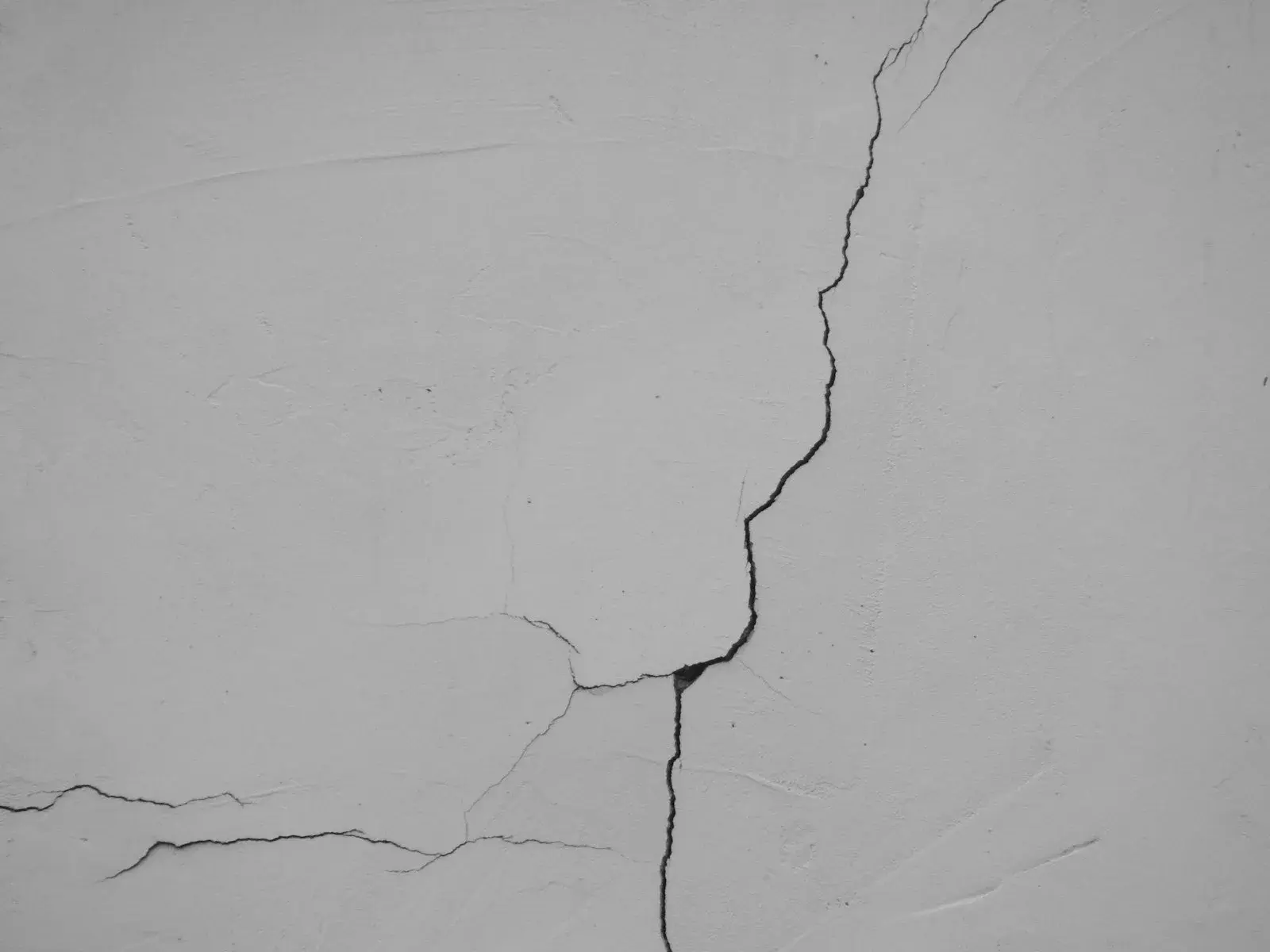
You can sell a house with foundation problems in Washington State, and there is no law that requires you to fix the structural damage before transferring title. What Washington does require, under RCW 64.06.020, is full disclosure of known structural issues on the Form 17 seller disclosure statement. That single legal obligation — combined with how mortgage lenders respond to visible foundation damage during appraisal — shapes the entire selling process across Seattle, Tacoma, Bellevue, Olympia, and the rest of the Puget Sound region.
The bigger obstacle is not the law. It is that Western Washington's clay soils, hillside topography, and 38 inches of annual rainfall produce one of the highest concentrations of foundation problems in any U.S. metro area — and almost no traditional mortgage lender will finance a property with active settlement, bowing walls, or unrepaired structural cracks. That eliminates the majority of buyers from the Seattle and PNW market for sellers who do not want to pay $15,000 to $80,000 out of pocket for repair.
That leaves Washington homeowners with two realistic paths: pay for engineered foundation repair and list traditionally, or sell as-is to a cash buyer who does not need a lender's approval. This guide covers the specific Washington disclosure rules, what foundation problems actually do to home value in the Pacific Northwest, real Seattle-area repair costs in 2026, the financial math on each path, and a step-by-step process for closing the sale.
The short version: Washington's seller disclosure law (RCW 64.06) requires you to disclose any known foundation issues on Form 17 but does not require you to repair them before selling. Most traditional lenders will not finance a property with visible structural damage, so cash buyers are the most common path — here is how cash home offers actually work, and they typically close in 7 to 14 days regardless of foundation condition.
Why Foundation Problems Are So Common in Western Washington
The Puget Sound region is one of the most challenging residential foundation environments in the United States, and the geology is the reason. Three factors converge to make foundation movement nearly inevitable in a meaningful share of Seattle, Tacoma, Bellevue, and Olympia homes:
1. Expansive clay soils. Glacial clay and silt deposits dominate the soil profile across King, Pierce, Snohomish, and Thurston counties. Clay expands dramatically when saturated and shrinks aggressively when dry, cycling lateral and vertical pressure against foundation walls and footings. 2. Hillside topography. Seattle, Bellevue, Tacoma, and Bellingham are built on hills. Slope stability, lateral creep, and soil downhill migration create lateral loads that flat-site foundations are not engineered to handle. 3. High annual rainfall and saturated soils. Seattle averages roughly 38 inches of rain per year, with the wet season running October through April. Continuously saturated soils lose bearing capacity and become more prone to seasonal heave and settlement.
Add an aging housing stock — large portions of Seattle and Tacoma housing was built between 1910 and 1970 with shallow footings, minimal drainage, and pre-modern foundation design — and the conditions are set for the foundation problems that show up in residential inspections across the Puget Sound region every week.
The most common foundation issues we see across Western Washington homes:
Pro Tip: A foundation crack alone is not necessarily an emergency. The pattern matters more than the presence. Horizontal cracks, cracks that change width along their length, cracks that have actively grown over time, and cracks accompanied by floor slope or door issues are the ones that require professional evaluation. A single vertical hairline crack in poured concrete is almost always cosmetic.
The Disclosure Requirement: What Form 17 Actually Asks About Foundations
Washington's seller disclosure law requires the seller of most residential property to complete Form 17 — the standard residential property transfer disclosure statement — within five business days of mutual acceptance. The form is mandatory for most one-to-four-unit residential sales, and Section 4 (Structural) directly targets foundation and structural issues.
Section 4 of Form 17 requires you to disclose, based on your actual knowledge, whether:
The legal standard is "actual knowledge." You are not required to commission a structural engineering inspection to look for issues you do not know about. But if you have ever had a contractor evaluate foundation cracks, hired an engineer to write a report, had piers or stabilization work done, or had any conversation that put you on notice that the foundation is moving, that is actual knowledge and it must go on the form.
After delivery of the completed Form 17, the buyer has three business days to review the disclosures and may rescind the purchase agreement during that window without penalty. Cash buyers rarely walk based on disclosure alone — they expect foundation issues in older PNW homes and underwrite them into their offer.
What Happens If You Hide Known Foundation Problems
Failing to disclose known foundation issues is misrepresentation of a material fact under RCW 64.06. The legal exposure is significant: the buyer can sue to rescind the sale after closing, recover damages including the full cost of repair, recover the cost of any structural engineering reports, and in some cases recover attorney fees. Washington courts have repeatedly held sellers liable for Form 17 omissions related to structural defects years after closing.
Buyers and their inspectors almost always find foundation problems anyway. A competent home inspector spots diagonal drywall cracks, sloping floors, and visible foundation movement in the first 30 minutes of a walk-through. If your disclosure says "no known structural issues" and the inspector immediately flags three of them, the deal blows up at inspection and the next buyer is going to ask you about it.
Disclose everything you know, attach any engineering reports or contractor estimates you have, and let the buyer make an informed decision. That is the path that protects the deal and protects you.
How Foundation Problems Affect Home Value in Washington
Foundation problems do not destroy a home's value. They reset it. The new value is roughly the market value in good condition, minus the cost of engineered repair, minus the cost of associated repairs (drywall, flooring, doors, drainage), minus a buyer's risk discount for the uncertainty of what else might be hidden.
Here is what typical foundation repair and related work runs in the Seattle and Puget Sound market in 2026.
| Repair Scope | Typical Cost Range | Timeline | |---|---|---| | Engineer's report and design | $800 to $2,500 | 1 to 3 weeks | | Single-area helical or push pier (per pier) | $1,200 to $2,200 | 1 to 2 days | | Moderate settlement (6 to 10 piers) | $12,000 to $30,000 | 3 to 7 days | | Significant settlement (12 to 20 piers) | $30,000 to $60,000 | 1 to 2 weeks | | Bowing basement wall stabilization (carbon fiber straps) | $4,500 to $15,000 | 3 to 7 days | | Wall replacement / I-beam stabilization | $15,000 to $50,000 | 2 to 4 weeks | | Crawl space encapsulation + moisture correction | $8,000 to $25,000 | 1 to 2 weeks | | Hillside slope stabilization | $25,000 to $150,000+ | 2 to 12 weeks | | Full underpinning + drainage + interior repair | $80,000 to $250,000+ | 6 to 16 weeks |
Beyond the hard repair cost, traditional buyers and their lenders apply a stigma discount even after the work is complete. The disclosure follows the property — Form 17 from prior owners, the engineer's report, the contractor's warranty documentation. Buyers ask whether the work was truly comprehensive, whether the underlying soil and drainage issues were corrected, and whether the problem will recur. That uncertainty typically discounts the post-repair sale price by another 5 to 12 percent versus a comparable home with no foundation history.
Cash buyers price differently. They calculate after-repair value, subtract the actual repair budget (often higher than the seller's repair quote because cash buyers also fix the underlying drainage and soil issues, not just the symptoms), subtract holding and resale costs, and subtract a profit margin — usually landing in the 65 to 80 percent of after-repair value range depending on the severity of the structural issue.
The Financial Math: Repair and List vs. Sell As-Is
The decision between engineered repair plus traditional listing and a direct cash sale comes down to net proceeds and timeline. Here is a realistic comparison on a typical Seattle-area home with moderate foundation settlement.
Example: $725,000 Seattle Home with Moderate Settlement (10 Piers Needed)
The traditional listing path nets roughly $59,000 more in this example. But only if you have $50,000 in cash for piering, drainage correction, and interior repair work, you can wait five to six months for closing, the repair work completes without complications, and no buyer renegotiates after inspection.
The cash path is faster, has zero out-of-pocket cost, requires no engineer or contractor coordination, and carries no contingency risk. The trade-off is leaving $59,000 on the table.
The right answer depends on your situation. If you are facing foreclosure, dealing with a death in the family, going through a divorce, relocating, or simply do not have $50,000 in cash for the front-end work, the timeline math often pushes toward the cash path regardless of the gross difference. If you have the cash reserves, the patience, and a home in otherwise good condition, engineered repair followed by traditional listing is usually the higher-yielding play.
Step-by-Step: Selling a House with Foundation Problems in Washington
If you decide to sell as-is to a cash buyer:
1. Document what you know. Walk the property and photograph every visible structural issue — drywall cracks, floor slope, foundation cracks, bowing walls, sticking doors, exterior wall separations. Pull any prior inspection reports, contractor estimates, or engineer reports. 2. Decide whether to get an engineer's report before selling. An engineer's report in the Seattle market typically runs $800 to $2,500. It is not required for a cash sale, and most experienced cash buyers run their own structural review during inspection. But a report can strengthen your disclosure and may help you negotiate a better offer. 3. Contact two or three cash buyers. Get quotes from reputable Washington cash buyers. Ask each how they evaluate foundation issues, what their repair budget assumption is, and what their offer math looks like. 4. Review the purchase agreement. Cash offers in Washington are typically free of financing and inspection contingencies, but read the contract carefully. The best agreements have a short inspection window (5 to 10 days) where the buyer confirms condition. 5. Complete Form 17. Be thorough. Disclose every structural issue you have actual knowledge of. Attach any engineer reports, contractor bids, or prior repair documentation. 6. Open escrow. A reputable Washington title company opens escrow, runs a title commitment, and confirms the property can transfer free of liens. 7. Sign closing documents. Most cash sales close in 7 to 14 days. You sign at escrow, funds wire, and the deed records the next business day.
If you decide to repair and list traditionally:
1. Hire a structural engineer. A licensed Washington structural engineer scopes the problem and writes a repair plan. Cost: $800 to $2,500. 2. Bid the repair work. Get three bids from reputable Western Washington foundation contractors. Verify Washington contractor licensing through L&I, check Better Business Bureau ratings, and ask for references on similar projects. 3. Address underlying drainage and soil issues. Most foundation problems in the PNW are driven by water management failures. Piers without correcting drainage usually means recurrence within 5 to 10 years. 4. Complete the repair work. Typical 10-pier moderate settlement projects in Seattle take 5 to 10 working days. Add drywall, flooring, and drainage work for another 2 to 4 weeks. 5. Get a final engineer's sign-off. A signed letter from the engineer confirming the repair was completed per the design plan strengthens your disclosure and reassures buyers. 6. List with an agent. Provide the engineering documentation, contractor warranty, and post-repair photos to the listing agent.
How Cash Buyers Actually Underwrite Foundation Problems
A reputable Washington cash buyer evaluating a Seattle 1948 craftsman with diagonal drywall cracks, a half-inch floor slope, and visible foundation movement will typically:
The resulting number is the offer. There is no underwriter to convince. There is no appraisal to clear. There is no FHA inspector flagging structural cracks. The foundation problem is priced in.
Pro Tip: Ask any cash buyer to walk you through their math. The reputable ones will show you the comparable sales, the foundation repair budget assumptions, and the spread they need. The ones who refuse to explain their math are usually the ones offering 55 to 60 percent of ARV instead of 70 to 80 percent.
Where Foundation Problems Hit Hardest in Washington
Foundation problems are not evenly distributed across the state. They concentrate in specific neighborhoods and topographies.
If you are selling in Seattle, Tacoma, Olympia, Bellingham, Renton, or Federal Way, and your home is older or on a hillside, foundation issues are something to investigate before deciding which sale path to take.
When Foundation Problems Combine with Other Issues
Foundation problems rarely show up alone in older PNW homes. The same homes that have settlement frequently have other issues that compound the selling problem and push the math further toward the cash path.
If your situation involves any combination of these, the cash path almost always wins on timeline and certainty. Want a real number on your specific home, foundation issues and all? Request a no-obligation cash offer and we will walk you through our math.
Timelines: How Long Each Path Actually Takes
The numbers tell the story. A direct cash buyer closes in 7 to 14 days. iBuyers like Opendoor almost always decline homes with active foundation issues because they fall outside their condition criteria. The traditional engineered-repair-and-list path runs four to seven months minimum and can stretch longer if engineering uncovers additional issues, if appraisal triggers further requirements, or if contractors are backed up (common in the Seattle market during the wet season).
If timeline is the constraint, cash is the only realistic answer. If maximum dollars is the constraint and timeline is flexible, traditional listing after repair typically wins by 6 to 12 percent net.
How Foundation Problems Compare to Other Distressed Conditions
Compared to other distressed-property issues in Washington, foundation problems are unique in two ways: they almost always require engineering (not just contractor work), and they almost always disqualify the home from FHA, VA, and conventional financing entirely. Read more on how foundation issues stack up against water damage and mold, fire damage, code violations, and a condemned-house sale.
For a side-by-side breakdown of cash buyer, iBuyer, and realtor outcomes on Washington homes, see cash buyer vs iBuyer vs realtor in Washington.
Common Mistakes Washington Sellers Make with Foundation Issues
The mistakes that cost Washington sellers the most money on foundation-affected homes:
1. Hiding known foundation issues on Form 17. The single biggest unforced error. Inspectors find diagonal drywall cracks and floor slope in 30 minutes. Disclose what you know. 2. DIY repair attempts. Patching cracks with concrete caulk, jacking up sagging floors with bottle jacks, or "leveling" the home with shims is not engineered repair and creates worse disclosure problems for the next buyer. 3. Hiring an uninsured contractor. Foundation repair in Washington requires a licensed, bonded, and insured general or specialty contractor. The cheapest bid is almost always the riskiest one. 4. Listing at full retail before repair. Showing the home with known foundation disclosure but no repair plan attracts only cash buyers — and cash buyers do not pay retail prices. Either commit to engineered repair before listing, or sell directly to a cash buyer at a cash buyer's price. 5. Repairing piers without correcting drainage. Foundation movement is driven by water management. Piers stabilize the structure but do not fix the underlying soil saturation issue. Without drainage correction, recurrence is likely. 6. Accepting the first cash offer without comparison. Cash buyer offer spreads on foundation-affected Washington homes can range from 55 percent to 80 percent of ARV depending on the buyer's underwriting model. Always get two or three quotes. 7. Skipping the engineer's report. Even on cash sales, an engineer's report (cost: $800 to $2,500) often pays for itself by giving cash buyers a clear repair scope, which tends to produce a tighter offer rather than a worst-case-assumption discount.
Frequently Asked Questions
Can I sell a house with foundation problems in Washington State?
Yes. There is no Washington law that prohibits selling a home with foundation issues. RCW 64.06.020 requires disclosure on Form 17, but does not require repair before transferring title. Cash buyers purchase Washington homes with foundation problems routinely.
Do I have to disclose foundation problems when selling a house in Washington?
Yes. Section 4 of Form 17 (Structural) specifically asks about settling, slippage, sliding, cracks, and other structural defects. Failing to disclose known structural problems is misrepresentation under RCW 64.06.
How much does foundation repair cost in Seattle and Western Washington?
Typical Seattle-area repair runs $12,000 to $35,000 for moderate settlement (10-pier project), $35,000 to $80,000 for significant settlement with wall stabilization, and $80,000 to $250,000+ for full underpinning and slope work.
Will an FHA or conventional lender finance a house with foundation problems?
No, in nearly all cases. Lenders require a structural engineer's report and completed repair before closing on homes with visible foundation issues. Cash buyers face no such constraint.
How long does it take to sell a house with foundation problems to a cash buyer in Washington?
7 to 14 days from offer acceptance in most cases. No lender, no engineer contingency, no repair contingency.
Why do Seattle and Tacoma homes have so many foundation problems?
Expansive clay soils, hillside topography, and 38 inches of annual rainfall create the perfect conditions for foundation movement. Add older housing stock (1910 to 1970 construction with shallow footings) and you get one of the highest U.S. metro concentrations of foundation problems.
Does foundation damage have to be repaired before selling in Washington?
No. Washington has no law requiring repair before transferring title. Disclosure under RCW 64.06.020 is the only obligation.
What to Do Next
If you own a Washington home with foundation problems, your real decision is between four to seven months of engineered repair work plus a traditional listing, or a 7 to 14-day cash close at a lower headline number with no out-of-pocket cost.
The right answer depends on your timeline, your cash reserves, and how much risk tolerance you have for the surprises that often come with structural work. There is no universally correct path.
If timeline matters more than absolute dollars, or if you do not have $40,000 to $80,000 in cash to fund engineering, piering, drainage correction, and interior repair before you sell, request a cash offer on your Washington home. We buy homes with foundation problems across Seattle, Tacoma, Bellingham, Olympia, and the rest of the Puget Sound region — settlement, bowing walls, hillside movement, and all. We will give you a real number, show you the math, and close in 7 to 14 days if you want us to.
If you have the cash and patience for the traditional path, hire a licensed Washington structural engineer to scope the problem, get three bids from reputable foundation contractors, address the underlying drainage issues, and budget another 30 to 50 percent on top of foundation cost for interior repair and finishes. Done correctly, the listed sale will net more — just expect it to take a full season longer than a cash close.
Either way, the Form 17 disclosure is non-negotiable. Disclose what you know, attach the documentation, and let the buyer make an informed decision. That is the path that protects the deal and protects you.