Sell Washington Rental as Out-of-State Landlord (SB 5197)
Out-of-state landlords selling a Seattle or Washington rental — SB 5197 notice, RCW 59.18 rules, and how to close from a distance.
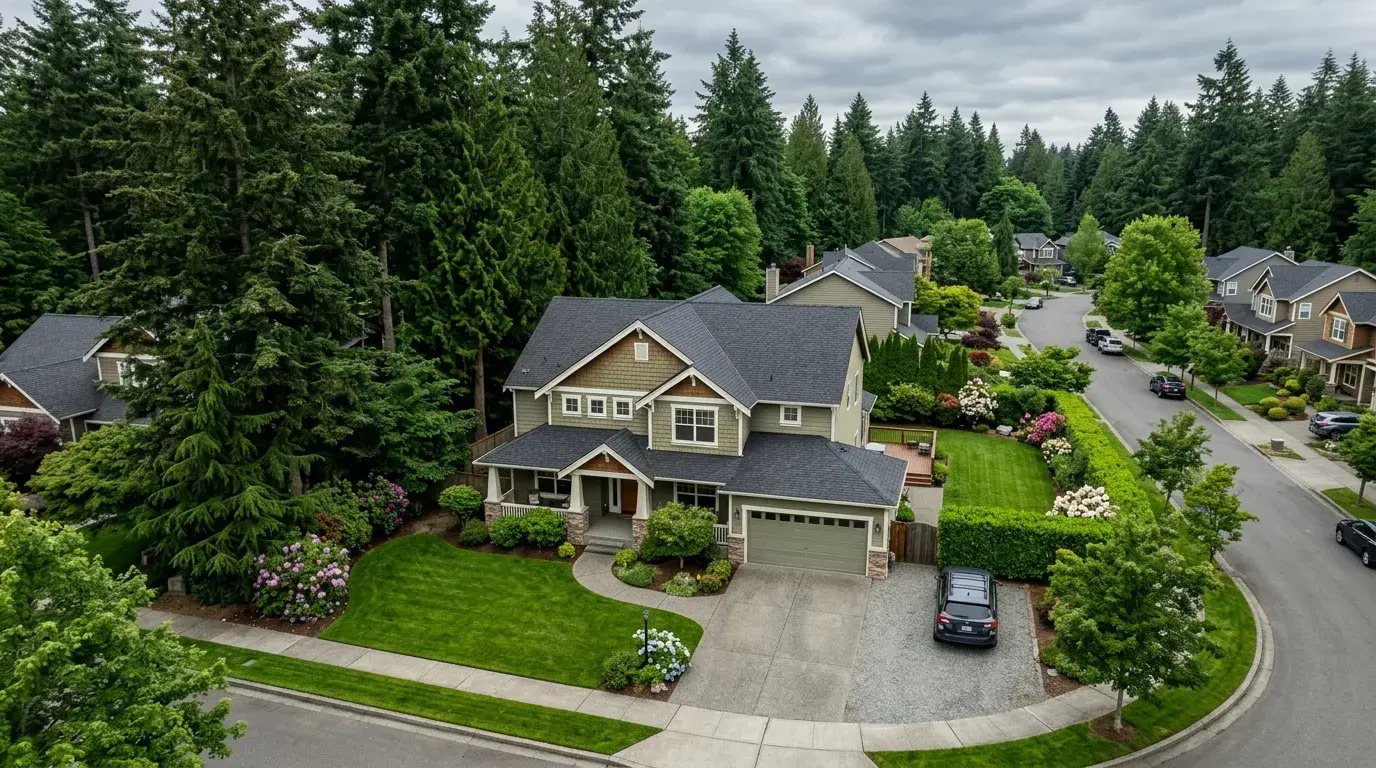
Selling a Washington rental from another state is a different game than managing one. The notice rules under SB 5197 and RCW 59.18 still apply to you, the in-state agent designation under RCW 59.18.060(15) is non-optional, and Seattle and Tacoma layer their own city ordinances on top. This guide covers exactly what out-of-state landlords need to do to sell a Seattle or Pacific Northwest rental property legally — and how to close the sale without flying back and forth.
We work with absentee owners across California, Oregon, Idaho, Texas, and beyond who own rental properties in Seattle, Tacoma, Olympia, Bellingham, and Spokane. The patterns are consistent: the legal mechanics are workable, but the coordination from 800 or 2,000 miles away is what trips most landlords up. Get the notice timing wrong, miss the in-state agent rule, or fumble the security deposit transfer at closing and you turn a clean sale into a lawsuit.
Here is the framework.
What Counts as an Out-of-State Landlord in Washington
Washington defines a landlord broadly — anyone who rents residential property to tenants is bound by RCW 59.18, regardless of where the landlord lives. The state does not have a separate statute for absentee owners, but it does impose specific obligations that hit out-of-state landlords harder than in-state owners.
The two statutory pillars to know:
If you own a Seattle rental and you live in Sacramento, Boise, or Portland, you must have a Washington-based agent on file. A Washington-licensed property manager satisfies this requirement. So does a real estate attorney with a Washington office, a friend or family member willing to accept service, or — in many cases — the listing agent or cash buyer's representative during the sale process.
Why the In-State Agent Rule Matters at Sale
When you serve a 90-day notice to sell under RCW 59.18.650(2)(e), the notice is only valid if the tenant has a current name and address for the responsible party. If you have not designated an agent or your designation is stale, the tenant's lawyer can argue the notice is defective — extending your timeline by 90 days and potentially exposing you to a wrongful eviction claim.
Out-of-state landlords selling without active property management often discover this gap mid-sale. The fix is straightforward but adds time: designate an agent in writing, deliver the updated designation to the tenant, then start the notice clock.
Pro Tip: If you are selling within the next 90 days and don't have a designated in-state agent, ask the cash buyer or your listing agent if they can serve as the post-closing notice contact. Many will, since they are managing the property going forward anyway.
SB 5197 and the New 60-Day Notice Window
SB 5197 took effect July 23, 2023, amending RCW 59.18.140. Before the change, Washington landlords could increase rent or modify lease terms with 30 days written notice. The new rule requires 60 days for any rent increase, change in deposits, or material change to the rental agreement.
For out-of-state landlords selling, SB 5197 matters in three specific situations:
1. Pre-sale rent increases. If you want to bring rent to market before listing or before getting a cash offer (which can lift the price), the 60-day notice window applies. Plan for this when timing your listing. 2. Lease modifications for showings. Adding a showing-access clause, a tenant cooperation incentive, or temporary lease changes during the sale period falls under the same 60-day rule. 3. Move-out coordination notices. If you are selling vacant and need to coordinate the tenant's exit alongside the closing date, any modification beyond the standard 90-day "elects to sell" notice triggers the 60-day window.
SB 5197 does not extend the 90-day owner-elects-to-sell notice — that timeline is set by RCW 59.18.650(2)(e) and remains 90 days. But the two notices interact when sellers need to do both.
How the Notice Periods Stack
| Notice Type | Period | Statute | Common Use | |-------------|--------|---------|------------| | Owner elects to sell (single-family) | 90 days | RCW 59.18.650(2)(e) | Vacate before listing | | Rent increase | 60 days | RCW 59.18.140 (SB 5197) | Pre-sale market adjustment | | Material lease change | 60 days | RCW 59.18.140 (SB 5197) | Showing access provisions | | Showing entry | 2 days | RCW 59.18.150 | Each individual showing | | Tacoma rent increase | 180 days | TMC 1.95 (2026 update) | Tacoma rentals only | | Seattle just cause declaration | Concurrent with 90-day | SMC 22.206.160(C) | Seattle rentals only |
If you need to raise rent and serve a sell notice, run the rent increase notice first or in parallel — not after — because tenants will dispute simultaneous notices that look retaliatory.
Three Paths Out-of-State Landlords Use to Sell
Once the legal framework is mapped, your real decision is which sale path fits your timeline, your tenant situation, and your tolerance for managing the process from out of state. Most absentee owners in our experience pick one of three.
Path 1 — List with a Local Agent (Vacate First)
This is the highest-gross-proceeds path on paper. You serve the 90-day notice, the tenant vacates, the property is cleaned and repaired, and a Washington-licensed real estate agent lists it for owner-occupant buyers.
The realistic timeline from decision to net cash in your account:
The friction for out-of-state landlords is real. You are funding 3 to 5 months of vacancy at full carrying cost, coordinating contractors you cannot supervise in person, paying 5 to 6 percent agent commission, and managing repair negotiations from your couch in California or Texas. For a property renting at $2,800 a month, four months of vacancy alone costs roughly $11,200 — before any repair bills.
Path 2 — Sell to an Investor with Tenants in Place
Selling to another investor means the tenants stay, the leases transfer at closing, and the buyer evaluates the property based on rental income. For out-of-state owners with stable tenants and decent paperwork, this is the cleanest path.
Investor buyers want documentation: current lease agreements, a rent roll showing 12 months of payment history, security deposit records, maintenance history, property tax and insurance costs, and any pending repair items or disputes. Well-documented properties with market-rate rents sell at a smaller discount to retail. Properties with below-market rents or thin records sell at a steeper discount.
The timeline is typically 60 to 90 days, with most of that being inspection, financing, and closing — not notice or vacancy. You don't serve any sell notice because the buyer is not asking the tenants to leave.
Path 3 — Sell to a Cash Buyer As-Is, Remote Closing
For out-of-state owners who want out fast, a cash sale closes the gap between distance and timeline. The buyer purchases the property in its current condition — tenants in place, deferred maintenance included, no showings required — and the entire transaction runs digitally.
Typical structure for an out-of-state remote close:
1. Send property details by email or phone. Buyer reviews exterior photos, county records, and rental history. 2. Buyer schedules a walkthrough or drive-by. You don't need to be present. 3. Written offer arrives within 24 to 48 hours. 4. Purchase agreement signed via DocuSign. 5. Title company handles escrow remotely. 6. Closing documents notarized in your state through a mobile notary or remote online notary. 7. Funds wire to your bank account at closing. 8. Total elapsed time: 7 to 14 days.
Cash sale prices run roughly 80 to 90 percent of retail in the current Pacific Northwest market, but the offset is the complete absence of carrying costs, repair bills, agent commissions, and tenant coordination from out of state. For the right situation — difficult tenants, deferred maintenance, time pressure, or an absentee owner without local infrastructure — the cash path often nets within a few thousand dollars of the traditional listing once vacancy and repairs are netted out.
For a deeper breakdown of the math behind cash offers, see our guide on cash buyer vs iBuyer vs realtor in Washington.
Net Proceeds Comparison — A Real Out-of-State Scenario
Take a realistic Pacific Northwest example: a single-family rental in Renton (King County) valued at $565,000, currently rented at $2,950 per month month-to-month, with roughly $18,000 in deferred maintenance (roof at end of life, dated kitchen, exterior paint). The owner lives in Phoenix and has not visited the property in three years.
| Factor | Vacate + List | Sell with Tenants (Investor) | Cash Sale As-Is | |--------|---------------|------------------------------|-----------------| | Sale price | $565,000 | $520,000 | $475,000 | | Agent commission (5.5%) | -$31,075 | -$28,600 | $0 | | Turnover and repairs | -$18,000 | $0 | $0 | | Lost rent (4 months vacancy) | -$11,800 | $0 | $0 | | Holding costs during vacancy and listing | -$9,500 | -$3,500 | -$1,200 | | REET (1.78% King County avg) | -$10,057 | -$9,256 | -$8,455 | | Closing costs | -$8,475 | -$7,800 | $0 (buyer pays) | | Travel costs (2 round trips for absentee owner) | -$2,400 | -$800 | $0 | | Estimated net to seller | $473,693 | $470,044 | $465,345 | | Timeline to close | 5 to 7 months | 60 to 90 days | 7 to 14 days |
The traditional listing nets roughly $8,300 more than the cash sale — but takes 5 to 7 months, requires coordinating contractors and showings remotely, and ties up your capital and attention for half a year. For an out-of-state owner balancing day jobs, family, and other investments, the cash sale captures within 1.7 percent of the gross retail outcome with a fraction of the friction.
If the property has more deferred maintenance, problem tenants, or below-market rents, the gap closes or flips. We have closed deals where the cash net actually exceeded the projected listing net once realistic vacancy and repair costs were modeled.
Handling Security Deposits from Out of State
Security deposit transfers cause more legal exposure for absentee owners than any other piece of the sale. Under RCW 59.18.270, all security deposits must transfer to the new owner at closing through an equivalent trust account. The original landlord remains liable until the transfer is properly completed and tenants are notified in writing.
For out-of-state landlords, the practical steps are:
1. Gather documentation before listing. Pull every deposit record — amount, date collected, tenant name, current trust account location. If your records are scattered across email, paper files, and a property management portal, consolidate them now. 2. Disclose deposits to the buyer in writing. Include a deposit schedule in the purchase agreement. The buyer needs to confirm acceptance of the transfer before closing. 3. Build the transfer into escrow. Have the title company itemize each deposit on the settlement statement. The funds move from your trust account to the buyer's account through escrow. 4. Send the tenant notification. The new owner sends written notice to each tenant with the new landlord's name, address, and the financial institution holding deposits. State law makes this the buyer's responsibility, but smart out-of-state sellers confirm it happened. 5. Retain records for 3 years. Both seller and buyer should keep transfer documentation for at least three years post-closing to defend against deposit disputes.
If deposits are mishandled, tenants can recover up to two times the deposit amount under RCW 59.18.270. For an absentee owner who cannot easily document the chain of custody, this is a real risk — and one cash buyers often address contractually by indemnifying the seller for any deposit-related claims after closing.
Out-of-State Tax Considerations
Selling a Washington rental from another state involves three layers of tax: federal, Washington state, and your home state. Each operates independently, and the timing of each matters.
Federal Capital Gains and Depreciation Recapture
The profit on the sale — sale price minus your adjusted cost basis — is taxed federally at 0, 15, or 20 percent depending on your taxable income. On top of that, every dollar of depreciation you claimed over the years of ownership is recaptured at a flat 25 percent federal rate.
A simplified example: a rental purchased in 2014 for $310,000 (excluding $90,000 land value), depreciated over 10 years at $11,272 per year, generates $112,720 in accumulated depreciation. The recapture tax alone is $28,180 — separate from any capital gains owed on the sale price appreciation.
Washington Excise Tax (REET) at Closing
Washington collects REET at closing on every real estate sale regardless of where the seller lives. The tax is graduated:
Most counties add a 0.5 percent local component, bringing the effective rate to 1.6 to 3.5 percent depending on bracket and location. King County, Snohomish County, and Pierce County all add the local portion. REET is paid by the seller at closing through escrow and is not negotiable in standard transactions.
For a deeper breakdown of REET brackets and how cash sellers structure around them, see our guide on Washington REET 2026 for cash sellers.
Washington Has No State Capital Gains on Real Estate
Washington's capital gains tax (effective 2022) explicitly excludes all real estate transactions under RCW 82.87. Whether the seller lives in Seattle or San Diego, no Washington-level capital gains tax applies to the sale.
Your Home State May Still Tax the Gain
This is the trap most out-of-state landlords miss. California, Oregon, Idaho, and several other states tax their residents' capital gains on out-of-state real estate. California's top rate is 13.3 percent. Oregon's is 9.9 percent. Idaho's is 5.8 percent. Some states offer credits for taxes paid to the situs state (Washington), but Washington's lack of state-level capital gains tax means there is nothing to credit against — your home state collects the full gain.
Before you accept any offer, run the numbers with a CPA who handles multi-state real estate. A 1031 exchange under IRC Section 1031 can defer both federal and home-state capital gains if you reinvest in another rental property within 45/180 days using a qualified intermediary.
Coordinating Showings and Inspections from Another State
For out-of-state owners going the listing or investor-sale route, showing coordination is the single biggest headache. RCW 59.18.150 requires 2 days written notice to enter a tenant-occupied unit for showings. For an absentee owner, this means tenants control the calendar in practical terms.
Strategies that work for distance management:
For absentee owners who are simultaneously dealing with tenant rent issues, lease disputes, or other complications, our guide on selling a rental property with tenants in Washington covers those scenarios in more detail.
When the Sale Is Triggered by a Job Move or Life Change
Many out-of-state landlords became out-of-state landlords by accident — a job relocation pulled them out of Seattle or Tacoma, the housing market timing was wrong to sell at the time, and the property became a rental by default. Three to seven years later, the calculation has changed and they are ready to exit.
If your current move-out-of-Washington story is fresh and you need to liquidate quickly to fund the new chapter, our Seattle job relocation playbook covers the timeline compression strategies and tax considerations specific to relocations.
The common thread across job-move sellers is that the property has been on autopilot — collecting rent, occasional repairs, light oversight from a distance. When the decision to sell crystallizes, the documentation gaps from years of casual management become the limiting factor. Cash buyers and investor buyers can absorb documentation gaps better than retail buyers, which is why so many job-move sellers default to one of those paths.
A Step-by-Step Timeline for Out-of-State Sale
Here is the sequence that protects out-of-state landlords legally and gets to closing efficiently from another state:
1. Verify your in-state agent designation is current. Update if needed, deliver the new designation to every tenant in writing, and confirm receipt. 2. Pull all property documentation. Lease agreements, rent roll, security deposit records, maintenance history, property tax and insurance records. Scan paper files and consolidate digitally. 3. Decide on your sale path. Vacate and list, sell with tenants to an investor, or sell to a cash buyer. Run the net proceeds math on each. 4. If vacating: serve proper notice. Use the correct form for state law (RCW 59.18.650(2)(e)) plus any city-specific requirements for Seattle or Tacoma. Serve by certified mail with return receipt. 5. Get the property valued. Request a comparative market analysis from a local agent and a cash offer from a direct buyer. Compare net proceeds, not gross sale prices. 6. Engage a Washington escrow company and CPA. The escrow company handles closing logistics. The CPA handles the federal/home-state tax structuring and any 1031 exchange timing. 7. Coordinate the closing remotely. All documents sign electronically. A mobile notary in your state handles wet signatures. Funds wire to your account. 8. Confirm deposit transfer and tenant notification post-closing. Verify the buyer sent the required RCW 59.18.270 written notice to tenants.
If your tenant situation has additional complications — squatters, behind-on-rent tenants, or active disputes — request a free remote cash offer from Northwest Cash Offers and we will walk through the specific timeline and net proceeds for your property. The consultation takes 15 minutes by phone.
What We See from Out-of-State Landlords Across the Pacific Northwest
A pattern repeats across the absentee owners we close with: the property was bought during a Seattle, Tacoma, or Olympia chapter of life, became a rental when the owner moved, and has spent 5 to 15 years on minimal-touch property management. By the time the owner reaches out to us, three or four pressure points have stacked up — a roof or HVAC system at end of life, a long-term tenant whose rent is now well below market, a property manager who is no longer responsive, and growing distance fatigue.
The traditional listing math looks attractive on paper but breaks down under realistic absentee-owner constraints. Vacating remotely costs more than landlords expect. Coordinating contractors from 1,500 miles away costs more in delays and bad outcomes than the contractors' bids suggest. Tenant cooperation during showings is unpredictable when relationships have been arms-length for years.
The investor sale and the cash sale both compress the timeline dramatically and remove the absentee-owner friction. The cash sale is the cleanest version of this — 7 to 14 days, fully remote, no contingencies, all logistics handled by the buyer.
If you own a rental property in Seattle, Tacoma, Olympia, Bellingham, Spokane, or anywhere else in Washington and you are managing from out of state, request a free no-obligation cash offer from Northwest Cash Offers. The process takes 24 to 48 hours, the offer is in writing, and you can compare it directly against listing scenarios with no commitment.
For landlords whose situation also involves an inherited property, our guide on selling an inherited house in Washington walks through the additional probate and tax considerations.
Frequently Asked Questions
Do out-of-state landlords have to register in Washington?
Yes. Under RCW 59.18.060(15), every Washington landlord — including out-of-state owners — must designate the name and address of an in-state agent or property manager who can accept legal service and notices on their behalf. The designation must be in writing and provided to every tenant. Seattle, Tacoma, and several other cities require an additional rental business license registered with the city, even when the owner lives in another state. Failure to register limits your remedies in court and can void notices you serve on tenants.
What is SB 5197 and how does it affect selling a rental in Washington?
SB 5197 is the 2023 Washington statute that overhauled rental notice requirements under RCW 59.18.140. It mandates a minimum 60 days written notice for any rent increase or material change to lease terms, replacing the prior 30-day standard. For out-of-state landlords planning to sell, the practical impact is that any pre-sale rent adjustments, lease modifications to ease showings, or move-out coordination notices now require the longer 60-day window. SB 5197 does not change the 90-day notice for owner-elects-to-sell terminations under RCW 59.18.650(2)(e), but it interacts with it when you also need to modify the tenancy.
Can I sell a rental property in Washington if I live in another state?
Yes. Out-of-state ownership does not restrict your right to sell a Washington rental. The legal complexity comes from coordinating notices, tenant communication, and closing logistics from a distance. Most out-of-state landlords selling in Washington use one of three paths: list with a Seattle or Tacoma agent who handles tenant access, sell to an investor buyer who takes the property with tenants in place, or sell to a cash buyer who closes remotely in 7 to 14 days. All three are legal and routinely used by absentee owners in California, Oregon, Idaho, and beyond.
How do I serve a 90-day sell notice on a Washington tenant when I live out of state?
The 90-day notice under RCW 59.18.650(2)(e) must be served in writing using the format prescribed by the statute. Out-of-state landlords typically serve by certified mail with return receipt requested, or through a Washington-licensed process server or attorney. The notice must include the specific just cause reason, the date by which the tenant must vacate, and the landlord's contact information. In Seattle and Tacoma, city-specific forms apply and must be signed by the owner or designated agent. Many out-of-state landlords use a Washington property manager or real estate attorney to handle service correctly — improper notice extends the timeline and can expose you to wrongful eviction claims.
Do I have to pay Washington taxes on the sale of a rental property if I live out of state?
You owe Washington Real Estate Excise Tax (REET) on the sale regardless of where you live. REET ranges from 1.10 percent to 3.0 percent of the sale price depending on the bracket, paid at closing through escrow. Washington has no state income tax, so there is no state-level capital gains tax on real estate (real estate is excluded from Washington's capital gains tax under RCW 82.87). However, your home state may tax the gain — California, Oregon, and Idaho all tax their residents' out-of-state capital gains. Federal capital gains tax and depreciation recapture apply regardless. Coordinate with a CPA who handles multi-state real estate before closing.
Can I sell my Washington rental to a cash buyer remotely without traveling?
Yes. Cash buyers routinely close remote sales for out-of-state landlords. The process is fully digital: the buyer inspects the property, sends a written offer, contracts are signed via DocuSign or similar e-signature platform, the title company handles escrow, and closing documents are notarized through a remote online notary or mobile notary in your state. Funds wire directly to your account at closing. The total elapsed time is typically 7 to 14 days. You never need to set foot in Washington, and the buyer handles tenant communication, deposit transfer, and post-closing logistics.