Sell a House with Code Violations in Washington (2026)
Washington code violations don't block a sale — but they change who can buy. Here's how disclosure, liens, and as-is cash sales actually work.
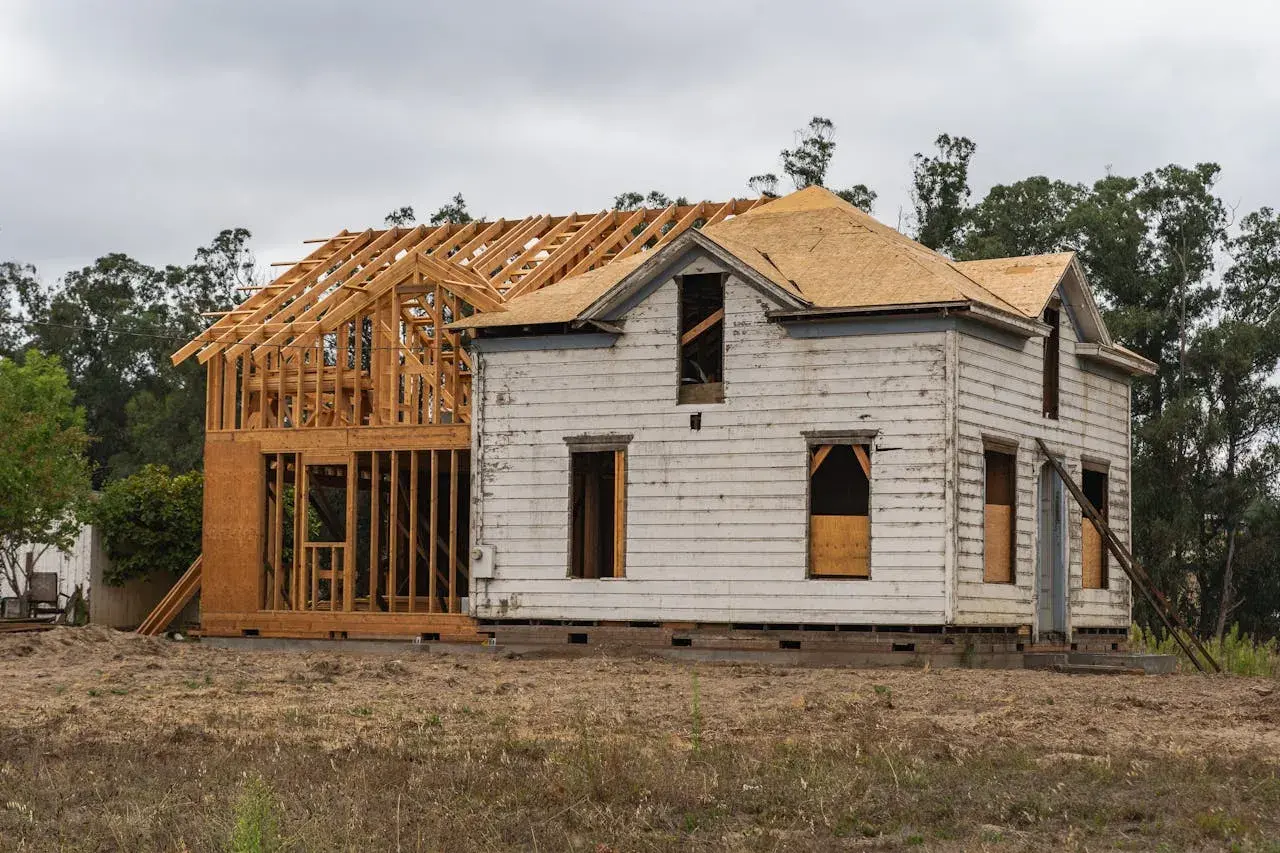
Yes, you can sell a house with code violations in Washington State. There is no state law that requires you to fix violations before transferring title, and the sale is completely legal as long as you disclose what you know. The catch is practical, not legal: most mortgage lenders will refuse to finance a property with open code violations, which effectively eliminates the majority of traditional buyers from your pool.
That means selling a house with code violations in Washington almost always comes down to two paths — fix the violations and list on the open market, or sell the property as-is to a cash buyer who does not need lender approval. This guide covers the specific Washington laws that apply, the types of violations you are likely dealing with, the real financial math on each option, and a step-by-step process for getting the property sold.
The short version: Washington's seller disclosure law (RCW 64.06) requires you to disclose known code violations on Form 17, but does not require you to fix them before selling. Any unpaid fines or code enforcement liens must be satisfied at closing through escrow. Cash buyers purchase properties with violations routinely — here is how cash home offers actually work — and can close in 7 to 14 days without the financing obstacles that kill traditional sales on properties with open violations.
What Counts as a Code Violation in Washington?
Code violations fall into several categories, and the type of violation matters because it determines who can enforce it, what the penalties look like, and how it affects your ability to sell. Washington's building codes are established at the state level under RCW 19.27 (the State Building Code Act), but enforcement is handled at the city and county level — which means the specific process varies depending on whether your property is in Seattle, Tacoma, Spokane, or an unincorporated county area.
Here are the most common categories of code violations Washington homeowners encounter:
Pro Tip: If you received a Notice of Violation (NOV) or a citation, read the document carefully. It will tell you which specific code section was violated, the deadline for compliance, and the daily fine amount if you fail to correct the issue. In Seattle, the first two inspections on a housing or land use complaint are free, but according to SDCI's enforcement page, all subsequent inspections are billed to the property owner on top of any fines.
How Code Violations Affect Your Ability to Sell
Code violations create two separate problems when you try to sell: a legal disclosure obligation and a practical financing barrier. Understanding both is critical to choosing the right selling path.
The Disclosure Requirement: Form 17 Under RCW 64.06
Washington's seller disclosure law requires you to complete Form 17 — the standard seller disclosure statement — for most residential property sales. Form 17 asks you to disclose, based on your actual knowledge, issues including:
The key phrase is "actual knowledge." You are not required to hire an inspector or go looking for violations you do not know about. But if you received a Notice of Violation, a citation, or a letter from code enforcement, that is actual knowledge and you must disclose it. Failing to disclose a known violation exposes you to a lawsuit under RCW 64.06 for misrepresentation of a material fact.
After you deliver the completed Form 17, the buyer has three business days to review it and can rescind the purchase agreement during that window if the disclosures reveal something they did not expect. This is a buyer protection, but in practice most cash buyers already anticipate issues and do not walk away over disclosed violations.
The Financing Barrier: Why Most Traditional Buyers Cannot Buy Your Home
This is where the real problem lives. Even if you disclose everything perfectly and a buyer wants to purchase your home, their lender will almost certainly refuse to fund the loan if open code violations exist.
FHA, VA, and conventional mortgage lenders require the property to meet minimum habitability and safety standards before they will approve a loan. The lender's appraiser will flag active code violations, unpermitted work, and health or safety deficiencies — and the loan will not close until those issues are resolved. In practice, this means:
This financing barrier is the single biggest reason homes with code violations sit on the market or fail to sell through traditional listings. It is also the reason cash buyers exist for these exact situations — no lender means no appraisal requirement, no habitability standard, and no deal falling through over the violations.
If you are dealing with a property that needs to sell quickly regardless of condition, here is how the Seattle market breaks down for fast sales and which selling path makes sense at different price points.
The Financial Math: Fix and List vs. Sell As-Is
The decision between fixing violations and listing traditionally versus selling as-is to a cash buyer comes down to net proceeds and timeline — not sale price. Here is a realistic comparison on a typical Washington home with moderate code violations.
Example: $450,000 Home with $40,000 in Code Violations
| Cost Category | Fix and List | Sell As-Is (Cash) | |---|---|---| | Sale price | $450,000 | $370,000 | | Repair costs to resolve violations | -$40,000 | $0 | | Agent commission (5.5%) | -$24,750 | $0 | | Staging and photography | -$2,500 | $0 | | Holding costs (3 months at $2,800/month) | -$8,400 | -$1,400 (2 weeks) | | Closing costs (seller portion) | -$6,750 | $0 (buyer pays) | | Code enforcement fines (accruing daily) | -$3,000 to -$15,000 | $0 (resolved at close) | | Estimated net to seller | $353,600 to $364,600 | $368,600 | | Timeline to close | 90 to 150 days | 7 to 14 days |
The numbers shift based on the severity of the violations and the local market, but the pattern holds: once you subtract the real costs of repairing violations, paying an agent, covering three-plus months of carrying costs, and absorbing daily fines that keep accruing, the cash offer often nets more — and it nets it months sooner.
This math gets even more lopsided when the violations are structural (foundation, roof, major electrical) because repair timelines stretch and contractors in the Seattle metro area are booked weeks to months out. Every week of delay is another week of mortgage payments, insurance, property taxes, and potentially escalating fines.
For a deeper dive on how the 70% formula works and when the net proceeds from a cash sale genuinely beat a listing, read our guide on how cash home offers actually work.
Code Enforcement Liens and How They Affect Closing
If your code violations have been open for a while and fines have been accruing, there may be a code enforcement lien on your property. Understanding how these liens work is important because they directly affect your ability to sell — even to a cash buyer.
How Washington Municipalities Place Liens
Under Washington law, cities and counties have the authority to place liens on properties for unpaid code enforcement fines and abatement costs. According to the Municipal Research and Services Center (MRSC), the lien framework works as follows:
What This Means for Selling
A code enforcement lien shows up on the title report. The title company will not issue clear title — and no buyer (cash or otherwise) will close — until the lien is resolved. The lien payoff gets handled the same way a mortgage payoff does: the escrow officer contacts the municipality, gets the exact payoff amount including any accrued interest, and pays it directly from the sale proceeds at closing.
The seller does not need to come to the table with a separate check for the lien. It comes out of the sale proceeds automatically. But if the lien amount exceeds your equity, you have a problem that needs to be solved before the sale can close — either through negotiation with the municipality, a payment plan, or in some cases a short sale arrangement.
Pro Tip: Contact your local code enforcement office before listing or accepting an offer. Ask for a current accounting of all violations, fines, and liens on the property. In Seattle, you can reach SDCI at (206) 615-0808. For King County unincorporated areas, contact King County Code Enforcement. Getting the exact numbers early prevents surprises during escrow.
The Five Most Common Situations That Lead to Selling with Code Violations
Every property with code violations has a backstory. Here are the five scenarios we see most often in Washington, and the specific considerations for each.
1. Inherited Property with Deferred Maintenance
The deceased owner let things slide — the roof leaked for years, the furnace was never permitted, the basement conversion never got inspected. The heirs do not have the cash to bring the property up to code, and the estate cannot justify spending $30,000 to $60,000 on repairs before listing.
This is one of the most common scenarios in Washington. Inherited property transfers hit 7.4 percent of all U.S. property transfers in 2025 according to Cotality data reported by Newsweek, and many of those properties come with years of deferred maintenance and unresolved code issues.
If this is your situation, our guide on selling an inherited house in Washington covers the probate timeline, tax implications, and the specific math on when a cash sale makes sense for estates.
2. Pre-Foreclosure with Accumulating Fines
You are behind on the mortgage and code enforcement fines are stacking on top. Every day that passes adds to both the lender's payoff amount and the city's lien. The property needs to sell before the trustee's sale date and before the fines consume whatever equity remains.
In this situation, speed is the most valuable asset you have. A cash sale that closes in 7 to 14 days stops both clocks — the foreclosure and the fines. For the full Washington foreclosure timeline and your options at each stage, read our guide to selling before foreclosure in Washington.
3. Divorce with a Property Neither Spouse Wants to Repair
The court ordered the house sold. Both parties want to split the equity and move on. Neither wants to fund repairs or manage a months-long listing process, especially when the property has open violations that make traditional financing difficult.
Selling as-is to a cash buyer resolves the property division cleanly and quickly, without either party advancing money for repairs that may or may not increase the net sale price. Our guide to selling a house during divorce in Washington walks through the legal and financial details specific to this situation.
4. Rental Property with Tenant-Caused Violations
The tenant damaged the property, the city cited violations, and the repair costs exceed what the security deposit covers. You want out of the property entirely rather than sinking more money into a problematic rental.
Landlords in this situation can sell the property with the tenant still in place — cash buyers purchase tenant-occupied homes regularly. The buyer inherits the lease and takes over responsibility for the violations, the repairs, and the tenant relationship.
5. DIY Renovation Gone Wrong
You started a renovation, did the work yourself, skipped the permits, and now the city has found out. The work does not meet code, the permits were never pulled, and the city is requiring you to either bring the work up to code (which may mean tearing out and redoing) or face daily fines.
Unpermitted work is one of the most expensive violations to resolve because it often requires opening walls, exposing framing and wiring for inspection, and rebuilding to current code standards — which may be significantly different from when the original work was done. A cash buyer takes the property as-is, violations and all, and handles the permit and inspection process themselves after closing.
Step-by-Step: How to Sell a House with Code Violations in Washington
Here is the actual process, from your current situation to a closed sale.
1. Get a complete picture of your violations. Contact your local code enforcement department and request a full accounting of all open violations, citations, fines, and liens on the property. In Seattle, call SDCI at (206) 615-0808. For other jurisdictions, contact your city or county building department. You need this information regardless of which selling path you choose.
2. Decide whether fixing the violations makes financial sense. Get contractor estimates for the repair work required to resolve each violation. Add up the repair costs, then add the carrying costs for the 2 to 4 months the repairs and re-inspection will take. Compare that total against the likely price reduction from selling as-is. If the repairs cost more than the price difference — or if you simply cannot fund them — selling as-is is the more rational path.
3. Complete the Form 17 seller disclosure honestly. Disclose every violation you know about. Disclose any notices, citations, or correspondence from code enforcement. Disclose unpermitted work. Attach copies of any notices of violation if you have them. Full disclosure protects you legally and sets clear expectations for the buyer.
4. Choose your selling path. If you are selling as-is, request offers from multiple cash buyers. Get at least two or three written offers so you can compare. Check proof of funds — a legitimate cash buyer will provide a bank statement or letter proving they have the money to close. If you are fixing and listing, hire a licensed contractor, pull proper permits, schedule the re-inspection with code enforcement, and list the property once the violations are cleared.
5. Close through a title company. The title company will handle the lien payoffs, including any code enforcement liens, directly from the sale proceeds at closing. Make sure the escrow officer contacts the municipality for a current payoff amount — fines may have accrued between the time you got your initial accounting and the closing date.
6. Confirm violation closure post-sale. After closing, follow up with code enforcement to confirm the violations are now associated with the new property owner, not you. This is especially important in jurisdictions where fines are assessed against the person, not just the property.
Washington-Specific Code Enforcement: What Varies by Jurisdiction
Code enforcement in Washington is not one-size-fits-all. The state sets the building code standards under RCW 19.27, but enforcement authority and penalty structures vary by city and county. Here is how the major jurisdictions differ:
| Jurisdiction | Typical Fine Range | Lien Authority | Compliance Timeline | |---|---|---|---| | Seattle (SDCI) | Up to $500/day | Yes (RCW 35A.21.405) | 30 to 60 days standard, days for emergencies | | Tacoma | $250 to $5,000 per violation | Yes | 10 to 30 days depending on severity | | King County (unincorporated) | Varies by violation type | Yes | Case-by-case | | Pierce County | Up to $500/day | Yes | 30 days standard | | Snohomish County | Varies | Yes | 30 to 90 days | | Spokane | Up to $500/day | Yes | 15 to 30 days |
In Seattle specifically, the enforcement process escalates through several stages according to SDCI: complaint, inspection, warning or citation, Notice of Violation, daily fines, and eventually referral to the City's Law Department. If the violator does not bring the property into compliance, the city can abate the nuisance itself and place the full cost on the property as a lien.
For vacant properties in Seattle, the penalties are steeper — daily fines starting at $150, and if the city must board up or demolish a dangerous structure, those costs become a tax lien on the property.
Why Cash Buyers Purchase Homes with Code Violations
Cash buyers are not doing you a favor by purchasing a property with violations — they are making a business decision. Understanding their math helps you evaluate whether an offer is fair.
A cash buyer looks at your property and calculates: after-repair value (what the home will sell for once violations are resolved and repairs are complete) minus repair costs, minus holding costs during renovation, minus their resale costs, minus a profit margin. The result is the offer price.
The reason cash buyers can close on properties that traditional buyers cannot is simple: no lender. With no mortgage underwriter in the picture, there is no appraisal requirement, no habitability standard to meet, and no financing contingency that can kill the deal. The buyer verifies title, confirms the violation and lien status, and closes.
For a detailed breakdown of how the 70% formula works, what "after-repair value" actually means, and how to tell whether a cash offer is fair for your specific property, read our honest guide to how cash home offers work.
What Not to Do When Selling a House with Code Violations
A few mistakes can turn a manageable situation into a much bigger problem:
Next Steps: Getting Your Property Sold
If you own a home with code violations in Seattle, Tacoma, or anywhere in Washington State, you have options. The violations do not prevent a sale — they just change who can buy and how the transaction is structured.
The fastest path from here is straightforward: get a clear accounting of your violations and fines from code enforcement, then get a written cash offer so you can see what the actual numbers look like for your specific property.
Request a free no-obligation cash offer from Northwest Cash Offers. We buy homes with code violations throughout Washington State — no repairs needed, no commissions, and we cover closing costs. You will get a transparent offer based on the real condition and violation status of the property, and you can walk away at any point if the numbers do not work.