Cash Buyer vs iBuyer vs Realtor in Washington: Which Sells Your House Fastest (2026)
Cash buyer vs iBuyer vs realtor in Washington compared — real timelines, fees, and net proceeds for Seattle sellers in 2026. Honest numbers, no spin.
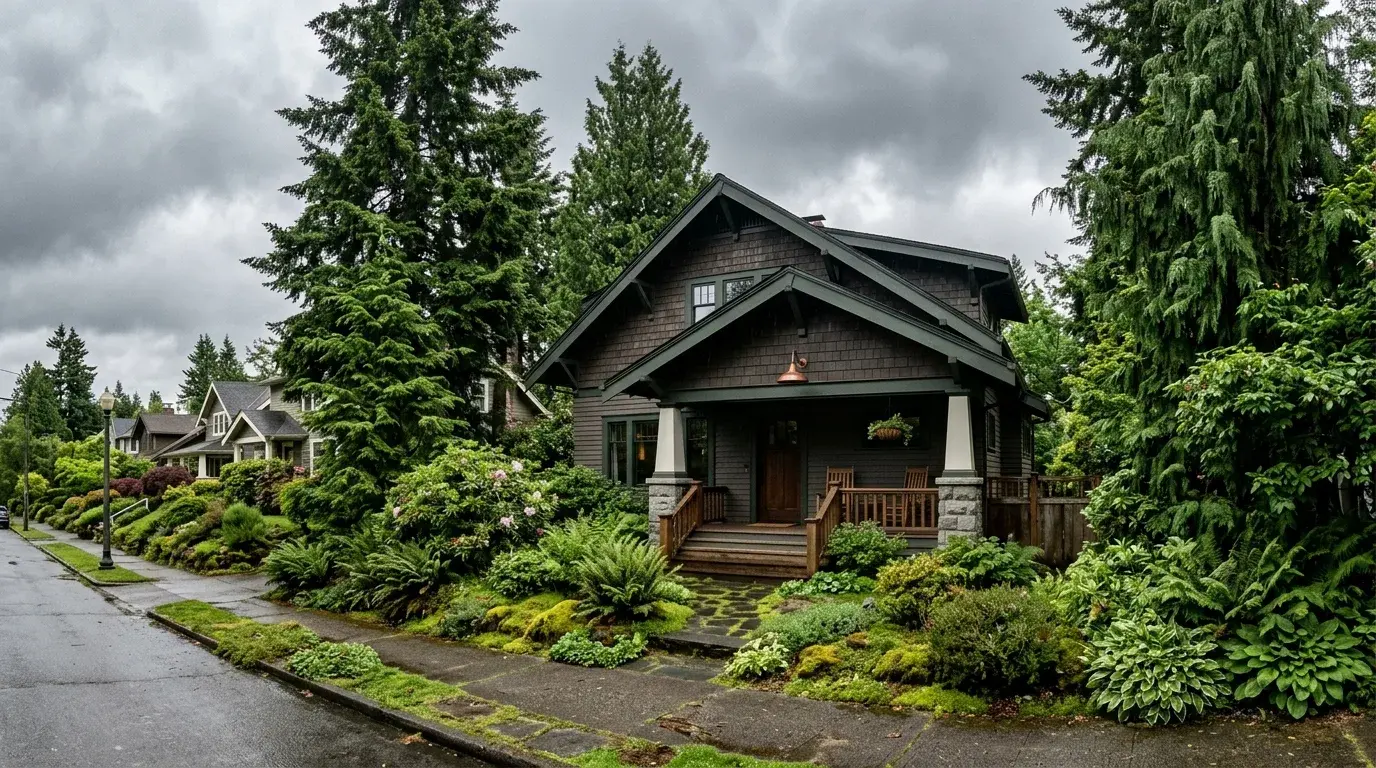
If you need to sell a house in Washington in 2026, you have three realistic paths: a direct cash buyer, an iBuyer like Opendoor, or a traditional realtor listing. Each moves at a different speed, charges different fees, and nets a different dollar amount — and the honest answer to "which is best" depends entirely on your home and your timeline.
This comparison lays out the real numbers side-by-side using Seattle and Washington state data, not marketing copy from any of the three.
The short version: A direct cash buyer closes fastest in Washington (7 to 14 days) and charges zero fees. An iBuyer closes in 14 to 30 days with a 5 to 8 percent service fee. A realtor listing takes 50 to 65 days in Seattle and costs 5 to 6 percent in commissions plus repair and closing costs. On a Seattle-median $830,000 home, net proceeds can look surprisingly close across all three paths once you subtract real costs — the deciding factor is almost always speed, certainty, and condition of the property.
The Three-Way Comparison at a Glance
Here is how the three selling paths compare on the variables that actually matter for Washington sellers in 2026.
| Factor | Direct Cash Buyer | iBuyer (Opendoor) | Realtor Listing | |---|---|---|---| | Typical close timeline | 7 to 14 days | 14 to 30 days | 50 to 65 days | | Gross offer vs ARV | 70 to 85% | 85 to 92% | 95 to 100% | | Service fee | 0% | 5 to 8% | 0% (agent commission separate) | | Agent commission | 0% | 0% | 5 to 6% | | Closing costs paid by seller | $0 (buyer covers) | 1 to 2% | 1 to 3% | | Repairs required | None | Often required after inspection | Often required after inspection | | Showings required | No | No | Yes (10 to 40+ typical) | | Financing contingency risk | None | None | 15 to 20% of deals fall through | | Works for distressed properties | Yes | No (condition restrictions) | Limited | | Certainty of close | Highest | High | Moderate |
The table is the 60-second version. The rest of this guide breaks down each path with the actual math on a Seattle-area home, so you can see which one fits your situation.
What Each Path Actually Is
Before comparing costs, it helps to be precise about what each of these buyers actually does — because the marketing lumps them together more than the economics do.
Direct cash buyer. An individual or company that purchases your home outright with their own funds, closes in their own name, and then renovates and resells or holds the property. Washington has a mix of local operators (including us at Northwest Cash Offers) and national brands. The close is fast because there is no lender, no appraisal contingency, and no financing to fall through. Our honest guide to how cash home offers actually work covers the underlying math in detail.
iBuyer. Short for "instant buyer." A technology platform — primarily Opendoor in Washington as of 2026 — that uses an automated valuation model to generate a near-instant offer based on public data and photos. The gross number is usually higher than a direct cash buyer, but iBuyers charge a service fee, do a post-offer inspection, and often come back with repair credits that reduce the net.
Realtor listing. A traditional sale through a licensed real estate agent on the Northwest Multiple Listing Service (NWMLS). The agent prices the home, markets it, holds showings, negotiates offers, and manages the escrow process. This path typically nets the highest gross price in exchange for the longest timeline and the most uncertainty.
Pro Tip: The word "cash" gets used loosely. Opendoor technically pays cash too — no mortgage involved. What separates a "direct cash buyer" from an iBuyer is the business model, the fee structure, and the condition flexibility, not the source of funds.
Speed: How Long Each Path Actually Takes in Washington
Speed is where the three paths diverge most sharply, and the averages hide a lot. Here is what the timeline really looks like in the Seattle metro for each.
Direct Cash Buyer Timeline
1. Day 1 to 2: Request an offer, share property info, brief walkthrough (in person or virtual). 2. Day 2 to 5: Receive written offer. Review, negotiate if needed, sign purchase and sale agreement. 3. Day 5 to 10: Title search, escrow setup, any required disclosures (Washington requires Form 17 in most resales). 4. Day 10 to 14: Close. Funds wired to seller the same or next business day.
Real-world median for a clean title Washington transaction: about 10 days. We have closed in 5 days when a seller had a hard deadline and title came back clean.
iBuyer Timeline
1. Day 1: Enter address on Opendoor, receive preliminary offer within 24 to 48 hours. 2. Day 2 to 7: Schedule and complete Opendoor's in-person assessment. 3. Day 7 to 14: Receive final offer (often revised downward based on inspection findings). Decide whether to accept. 4. Day 14 to 30: Sign, close, move out. Opendoor typically gives sellers a flexible close date within 60 days.
The key friction: the repair credit negotiation after inspection is common and can shave 1 to 4 percent off the headline offer.
Realtor Listing Timeline
1. Days 1 to 7: Meet agents, sign listing agreement, prep property (cleaning, minor repairs, staging). 2. Days 7 to 14: Professional photos, listing goes live on NWMLS. 3. Days 14 to 32: Showings and open houses. Seattle median days-on-market to pending was 18 days in early 2026 per NWMLS data. 4. Days 32 to 50: Inspection, appraisal, buyer financing, potential renegotiation. 5. Days 50 to 65: Close.
About 15 to 20 percent of listings fall out of contract at least once, usually during inspection or financing. When that happens, the clock resets and the effective timeline can stretch to 90+ days.
The Real Math on a Seattle-Median $830,000 Home
Here is where the comparison gets specific. Using Seattle's 2026 median home price of roughly $830,000 (NWMLS King County data), assuming a home in good condition needing about $25,000 in cosmetic updates.
Direct Cash Buyer Net
iBuyer (Opendoor) Net
Realtor Listing Net
The Spread
On paper the realtor listing wins by about $78,000 over Opendoor and $124,000 over a direct cash buyer. That is a real gap. But it assumes:
For homes needing more than cosmetic work, the gap collapses or reverses. A home needing $100,000+ in repairs, inherited properties, tenant-occupied rentals, or pre-foreclosure timelines almost always favor cash. Our guide to selling a house before foreclosure in Washington walks through why the math flips in distressed situations.
Net Proceeds Visualized
When Each Path Wins
Instead of one-size-fits-all advice, here is when each path is the right answer for Washington homeowners.
Choose a Direct Cash Buyer When:
Choose an iBuyer When:
Choose a Realtor When:
The Opendoor Alternative in Seattle: What Sellers Should Know
Opendoor is the dominant iBuyer in the Seattle area, but it is not the only option — and in many cases it is not the best option for a seller who values speed and certainty. Here is a direct comparison of an Opendoor offer versus a local direct cash buyer on the same Seattle-area home.
For sellers with homes in good condition in mainstream suburbs, Opendoor's higher gross offer can win on net. For everyone else — homes needing work, older homes, rural or semi-rural properties, tenant-occupied rentals, inherited or distressed situations — a direct cash buyer is usually the better Opendoor alternative in Seattle because the "higher" iBuyer offer disappears once repair credits and fees are applied.
One more point: iBuyers pause and restart acquisition programs based on market conditions. In 2022 and 2023, most iBuyers dramatically scaled back Pacific Northwest operations when rates spiked. A local cash buyer is there through every cycle.
Fee Comparison: Where Your Money Goes
The fee difference between the three paths is often larger than the gross offer difference. Breakdown for the same $830,000 Seattle home:
The Risk Side of the Comparison
Speed and fees are easy to quantify. Risk is harder — but it is often the deciding factor for Washington sellers in situations where a deal falling through would be catastrophic.
A Real Seattle Scenario
A homeowner in North Seattle inherited a 1948 house from her father last year. The home was structurally sound but had original wiring, a 28-year-old roof, and a kitchen that hadn't been updated since the 1980s. ARV after full renovation: about $780,000. As-is condition: not insurable by most lenders without immediate repairs.
Her three options:
1. Opendoor: Declined to make an offer because of the roof and electrical age. 2. Realtor: Estimated $85,000 in required pre-listing repairs to make it financeable, plus 60 to 90 days on market. Net estimate after repairs, commission, and carrying costs: $590,000 in approximately 5 months. 3. Direct cash buyer: Offered $565,000, no repairs, closed in 11 days. Net: $565,000 in less than two weeks.
On paper the realtor path won by $25,000. In practice, after the realtor quoted 5 months and $85,000 upfront, she took the cash offer — because she didn't have $85,000 and couldn't carry the house that long. The "winning" path on a spreadsheet was not actually achievable given her situation.
That gap between theoretical max and practical max is where most Washington sellers actually live.
How to Decide in Under 10 Minutes
A simple decision framework for Washington homeowners in 2026:
1. Can you afford 2 to 3 months of carrying costs? If no, rule out the realtor path. 2. Does your home need more than $25,000 in repairs? If yes, iBuyers will either decline or heavily discount. Lean direct cash buyer. 3. Is your timeline under 30 days? If yes, cash buyer. If 30 to 60 days, iBuyer is viable. If 60+ days, realtor is on the table. 4. Do you have tenants, probate complications, or a foreclosure clock? Lean cash buyer — the certainty and speed are worth the gross-price trade. 5. Is your home move-in ready, built post-1970, in a mainstream suburb? Then all three paths are real options and the question is pure math on net proceeds.
If you are not sure which bucket you fall into, request a no-obligation cash offer — we will give you a real number you can compare against an Opendoor quote and a realtor's CMA, then you decide. No pressure, no upfront fees.
Frequently Asked Questions
What is the fastest way to sell a house in Washington in 2026? The fastest way to sell a house in Washington is a direct cash buyer, which typically closes in 7 to 14 days. iBuyers like Opendoor close in 14 to 30 days but charge 5 to 8 percent service fees. Traditional realtor listings in Seattle average 18 days to pending plus 30 to 45 days to close, for a total of roughly 50 to 65 days.
Is an Opendoor offer better than a cash buyer in Seattle? An Opendoor offer in Seattle is usually similar in gross price to a direct cash buyer, but Opendoor charges a 5 percent service fee plus 1 to 2 percent in closing costs and often requires repair credits after their inspection. A direct cash buyer pays no service fee, covers closing costs, and buys as-is — so net proceeds are frequently within 1 to 3 percent of each other while the cash path involves far less back-and-forth.
How much do realtors charge in Washington State? Total real estate commissions in Washington typically run 5 to 6 percent of the sale price, split between the listing agent and the buyer's agent. After the NAR commission lawsuit settlement in 2024, buyer agent compensation is now negotiated separately, but most Seattle-area sellers still pay 4.5 to 5.5 percent total when all is said and done. On an $830,000 Seattle median home that is $37,000 to $46,000 in commissions alone.
Do cash buyers pay less than iBuyers? Gross offers from direct cash buyers and iBuyers are usually within 5 percent of each other. The real difference is in fees and repair deductions. iBuyers charge a 5 to 8 percent service fee and routinely deduct repair credits after inspection. Direct cash buyers charge no service fee and buy as-is with no post-inspection renegotiation, which often makes net proceeds comparable or better despite a slightly lower headline number.
When does listing with a realtor net more than selling for cash in Washington? Listing with a realtor nets more when the home is in move-in-ready condition, the seller can wait 60 to 90 days, and no major repairs are needed. Once you factor in 5 to 6 percent commissions, 1 to 2 percent closing costs, repair credits from inspection, and 2 to 3 months of mortgage, taxes, insurance, and utilities, the retail price premium often shrinks to break-even or less — especially on homes needing work.
Are iBuyers still operating in Seattle in 2026? Opendoor is the primary iBuyer still active in Seattle and the greater Puget Sound region as of 2026. Offerpad pulled back from many Pacific Northwest markets in 2023, and Zillow Offers shut down nationally in 2021. Opendoor's service area in Washington covers most of King, Pierce, and Snohomish counties, though eligibility varies by home type, age, and condition.
The Bottom Line for Washington Sellers
There is no universally "best" path. There is only the best path for your home, your timeline, and your cash flow.
If your Seattle home is move-in ready and you can wait 60 days, list it with a realtor. If it is in good condition and you want a fast, hands-off sale with a slightly better gross number, an iBuyer like Opendoor is worth a quote. If you need certainty, speed, or you have any condition, timeline, or situational complexity — a direct cash buyer is almost always the practical winner.
The right move is to get all three numbers on the same table and compare net proceeds, not gross offers. Request a free, no-obligation cash offer from Northwest Cash Offers and use it as a benchmark against whatever Opendoor and your realtor quote. No fees, no pressure, just a real number for your real home.