How to Sell a Fire-Damaged House in Washington (2026 Guide)
Sell a fire-damaged house in Washington: Form 17 disclosure rules, insurance payout timing, cash buyer pricing, and the real 2026 timeline after a house fire.
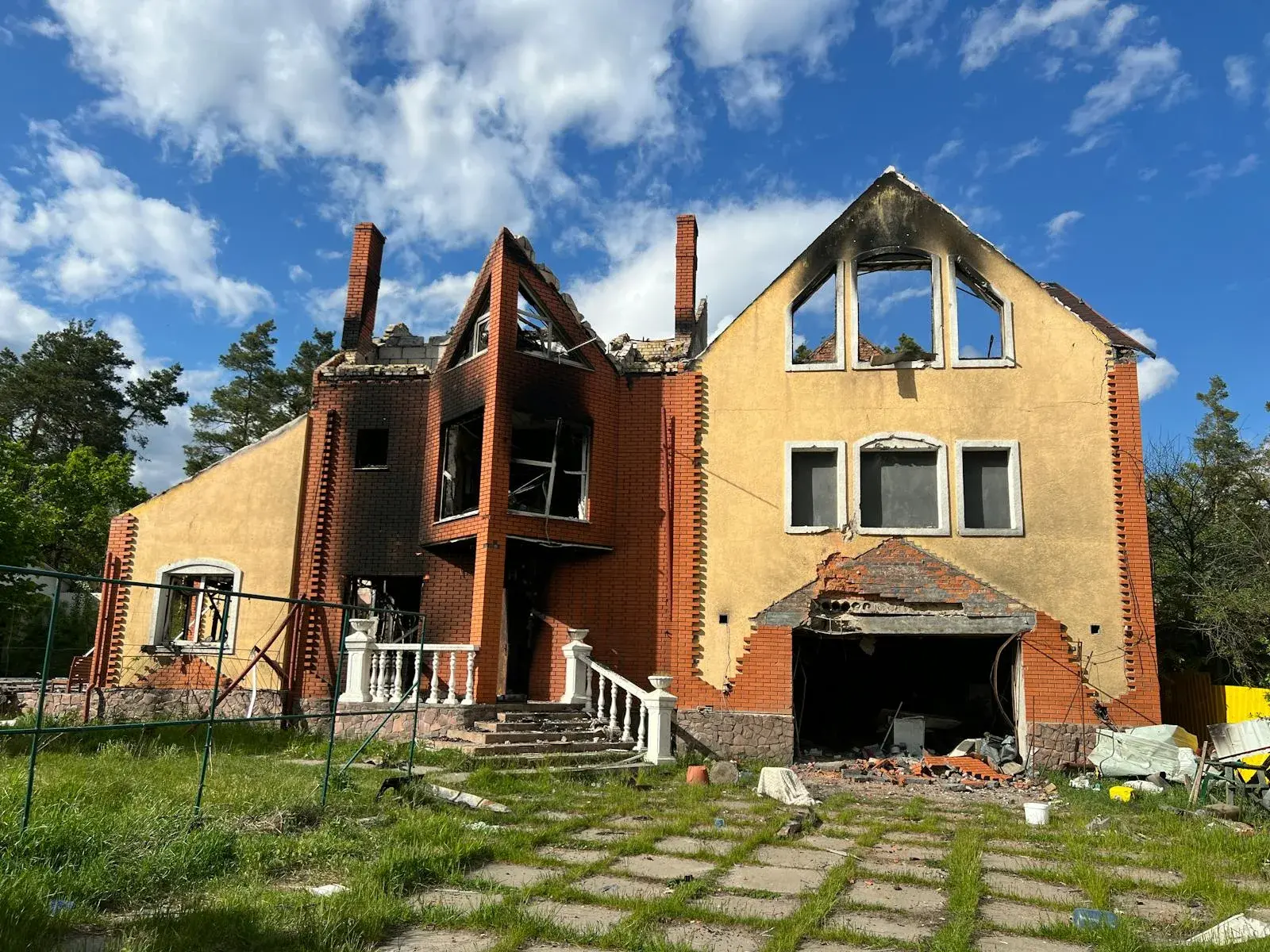
If you need to sell a fire-damaged house in Washington, the fastest path in 2026 is a direct cash sale that closes in 10 to 21 days, because conventional mortgage lenders will not finance a home with active fire damage and traditional listings routinely sit unsold for 4 to 10 months. Washington law does not require you to repair the damage before selling, but RCW 64.06.020 does require you to disclose the fire and any related insurance claims on the Form 17 Seller Disclosure Statement. Most fire-damaged Washington homes sell for 40% to 70% of pre-fire value in an as-is cash transaction, with insurance proceeds paid separately and often making the seller whole.
This guide walks through what Washington's 2024 and 2025 wildfire seasons have left behind in the Seattle, Tacoma, Olympia, and Eastern Washington markets, the Form 17 disclosure rules specific to fire damage, how insurance claims interact with a sale, what a fire-damaged home actually nets in cash versus on the open market, and the three-step workflow most Northwest Cash Offers sellers use to close in under three weeks.
> Important: This is a plain-English guide, not legal or tax advice. Fire damage sales involve insurance claim assignments, RCW disclosure obligations, and lender payoff issues that vary by situation. Confirm the current Form 17 version with the Washington Real Estate Commission and speak with a Washington-licensed real estate attorney before signing any purchase agreement that transfers an open insurance claim.
The Short Version — Selling a Fire-Damaged Home in Washington
If you only read one section of this article, read this one. Here is the compressed version every Washington homeowner dealing with fire damage should understand:
The rest of this guide unpacks each point with specific Washington numbers, example settlements, and the exact mechanics of how insurance claim assignments work at closing.
The Washington Fire-Damage Market in 2026
Washington's back-to-back 2024 and 2025 wildfire seasons have reshaped the inventory of fire-damaged homes in the state. According to Washington Department of Natural Resources reports, roughly 300,000 acres burned across 1,800 fires in 2024, and 1,851 fires burned another 251,840 acres in 2025. The Retreat Fire alone consumed more than 21,000 acres in 2024, and 2025's season burned structures across Kittitas, Chelan, Okanogan, and Yakima counties.
Residential fire damage in 2026 comes from three buckets:
1. Wildfire-driven losses concentrated in Eastern Washington, the Methow Valley, and the Cascade foothills — homes where the exterior burned, the structure survived, or a total loss occurred. 2. Interior house fires — the kitchen, electrical, chimney, and appliance fires that make up the majority of claims statewide, including in Seattle, Tacoma, Bellevue, and other Puget Sound markets. 3. Smoke-only damage from neighboring-property fires or extended wildfire-smoke exposure, which can saturate drywall and HVAC systems enough to require full remediation.
For the first two buckets, the sale mechanics are similar: traditional lenders refuse to finance, appraisers can't assign a reliable value, and the realistic buyer pool narrows to cash investors. For the third — smoke-only damage — a professional ozone/thermal-fog treatment plus carpet and drywall replacement can often restore the home to mortgageable condition within 4 to 8 weeks, at which point a traditional listing becomes viable again.
Why Fire-Damaged Homes Sit on the Open Market
The single biggest misconception Washington sellers have after a fire is that NWMLS will work for them if they just price aggressively. It rarely does. Here is why:
Cash buyers sidestep all four issues because they buy without a lender, without an appraisal contingency, and without an inspection contingency. That is the core of why cash offers work for distressed Washington homes when traditional financing cannot.
What Fire Damage Does to a Home's Value in Washington
Fire damage devalues a Washington home across three dimensions: the structure itself, the stigma, and the insurability of the rebuilt property. The relative weight of each depends on how severe the damage was and where the home sits.
The big outliers are homes on high-value land. A total-loss home on a $900,000 Mercer Island lot still has $650,000+ in land value net of demolition, because the buyer's real purchase is the dirt. The same total-loss home in a rural Eastern Washington market without high land demand may net closer to 15% of pre-fire value. Location does more work than most sellers realize.
The Three Parts of Fire-Damaged Home Pricing
A reasonable cash offer on a fire-damaged Washington home will explicitly back into these three numbers. If a buyer can't show the math, that is a sign they are either a wholesaler trying to tie up the contract or are hoping to renegotiate down after walking the property.
Washington's Form 17 Disclosure Requirements for Fire Damage
Washington's Seller Disclosure Act, codified in Chapter 64.06 RCW, requires sellers of improved residential property (1 to 4 units) to deliver a Seller Disclosure Statement — universally called Form 17 — to the buyer within five business days of mutual acceptance. The form asks about 80+ property conditions, and fire damage falls under several sections.
The critical disclosure sections for a fire-damaged home include:
Under RCW 64.06.030, the buyer has three business days after receiving Form 17 to rescind the offer. If a seller fails to deliver Form 17, or delivers an inaccurate one, the buyer can rescind at any time before closing under RCW 64.06.040 — and may have fraud and misrepresentation claims against the seller after closing as well.
What "Actual Knowledge" Means
Washington's disclosure standard is actual knowledge — not constructive or investigative knowledge. The seller must disclose what they genuinely know at the time they sign Form 17. They do not have to hire an inspector, order a structural report, or investigate beyond their own awareness.
That means if you know there was a fire, you disclose it. Period. You do not get to hedge, guess, or rely on "the buyer will figure it out." In a state where fire-department run records, insurance claim histories, and county permit records are all accessible to any buyer with a real estate attorney, a prior fire is almost always discoverable — and failure to disclose almost always looks worse in litigation than the fire itself did.
Our guide on selling a house with code violations in Washington covers the parallel disclosure obligations for permit issues that often overlap with fire rehabs.
The "As-Is" Clause Does Not Eliminate Form 17
A common misconception: "I'm selling as-is, so I don't have to disclose." That is wrong. The as-is clause in a purchase agreement governs what repairs the seller will make before closing — it does not override statutory disclosure duties under RCW 64.06. The seller still completes Form 17; the buyer simply agrees not to request repairs based on what the form reveals. Even cash buyers who accept the home in its current condition typically require a completed Form 17 on file at escrow.
Insurance Claims and the Sale: Three Structures That Work
Fire damage nearly always triggers an insurance claim, and how that claim interacts with the sale is the single biggest technical decision in a fire-damaged Washington transaction. There are three structures that work in practice.
Structure 1: Seller Closes Claim, Keeps Proceeds, Discounts Sale
This is the cleanest structure when the insurance claim is either already settled or clearly on a fast track to settlement. The seller finalizes the claim with their carrier, receives the full payout, and sells the home at a discount that reflects the remaining unrepaired damage. Insurance proceeds and sale proceeds are separate, and the seller's net is the sum of both.
This structure works well when the payout is likely to be near policy limits (which makes the seller whole) and when the buyer does not want any exposure to claim uncertainty. The downside is time — Washington wildfire claims in 2024 and 2025 routinely took 45 to 120 days to settle because carrier adjusters have been overwhelmed.
Structure 2: Seller Assigns Claim to Buyer at Closing
The seller signs an assignment of benefits at closing that transfers the remaining insurance claim to the buyer. The buyer then works directly with the adjuster to finalize the claim after taking title. The sale price reflects the home's as-is value, and the buyer's upside is whatever additional dollars they can negotiate from the carrier.
This is common with cash buyers who have experience working with Washington insurance carriers and who are comfortable taking on the claim-negotiation work. The seller's benefit is speed — they close in 10 to 21 days instead of waiting for claim resolution. Assignment of benefits must be documented in the purchase agreement and, in some cases, requires carrier notification before the assignment is binding.
Structure 3: Combined Offer (Property + Claim in One Payment)
The buyer makes a single offer that explicitly includes both the property and the rights to any pending insurance proceeds, paid as one combined amount at closing. This is the fastest structure because everything settles at once. It works best when the claim is stalled, when the payout is uncertain, or when the seller wants a definitive number and a clean exit.
The tradeoff: the combined offer is almost always lower than the sum of structures 1 or 2 on a dollar basis, because the buyer is pricing in claim risk. For sellers facing foreclosure, active relocation timelines, or probate deadlines on an inherited fire-damaged property, the speed premium is often worth the reduced gross number.
Real Numbers: Three Washington Fire-Damage Scenarios
To make the math concrete, here are three representative Washington fire-damage scenarios with realistic 2026 numbers.
Scenario A — Kitchen Fire in a $725,000 Seattle Home
A North Seattle homeowner has a kitchen fire that damages cabinetry, appliances, drywall, and part of the ceiling. Smoke damage extends through the main floor. The structure is sound. Pre-fire value: $725,000. Estimated repair cost: $95,000.
| Item | Amount | |---|---| | Cash offer at 68% of pre-fire value | $493,000 | | Expected insurance payout (after $2,500 deductible) | $92,500 | | Combined net to seller | $585,500 | | Equivalent retail list price (after $95K repair, -5% carry) | $612,750 | | Net after retail (minus 6% commissions, REET, carrying) | $552,000 |
The cash path nets $33,500 more than a repair-and-list strategy, because the seller avoids 4 to 6 months of carrying costs, repair management, and commission. It also closes in 2 to 3 weeks instead of 6 to 9 months.
Scenario B — Significant Structural Fire in a $525,000 Tacoma Home
A Tacoma homeowner has an electrical fire that destroys the attic, compromises roof framing, and requires full electrical system replacement. Smoke saturation throughout. Pre-fire value: $525,000. Estimated repair cost: $215,000.
| Item | Amount | |---|---| | Cash offer at 52% of pre-fire value | $273,000 | | Expected insurance payout (after $5,000 deductible, depreciation) | $175,000 | | Combined net to seller | $448,000 | | Equivalent retail after repair ($525K - $215K repair - 6% commission - carry) | $225,000 |
Here the cash path nets roughly $223,000 more than a repair-and-list approach, because the repair cost eats most of the post-repair price. This is the textbook case for a fast Tacoma cash sale.
Scenario C — Total Loss in a $650,000 Olympia Suburb
An Olympia homeowner loses the home entirely in a structure fire. Foundation is salvageable; everything above it is gone. Pre-fire value: $650,000. Estimated rebuild cost: $475,000. Land value: $285,000.
| Item | Amount | |---|---| | Cash offer at land value minus demolition | $255,000 | | Expected insurance payout (dwelling coverage at policy limit) | $450,000 | | Combined net to seller | $705,000 |
The combined cash-plus-insurance path actually exceeds pre-fire value, because the insurance payout is based on rebuild cost (which exceeds current market value in a softer market) and the seller still captures the land value from the cash buyer. For a seller who does not want to spend 12 to 18 months rebuilding, this is the clean exit. Our Olympia fast-sale guide covers the Thurston County closing workflow.
The Fire-Damaged Home Sale Workflow in Washington
Here is the realistic 14-day workflow for a fire-damaged Washington home sold to a cash buyer with clean title and a cooperative insurance claim structure:
1. Day 1 — Initial call. Seller describes the property, fire history, insurance status, and timeline. Buyer asks for photos and claim paperwork. 2. Day 2 or 3 — Walkthrough. Local cash buyer walks the property with a contractor or restoration estimator. Inspection takes 45 to 90 minutes for most fire-damaged homes. 3. Day 3 to 5 — Written offer. Cash offer in writing with proof of funds, earnest money terms, and a proposed structure for the insurance claim (keep, assign, or combine). 4. Day 5 to 7 — Purchase agreement signed, Form 17 delivered. Escrow opens at a Washington title company. Buyer has three business days to review Form 17 but typically waives that window because they have already walked the property. 5. Day 7 to 10 — Title search and insurance assignment (if applicable). Title company runs the preliminary title commitment. If the insurance claim is being assigned to the buyer, the assignment paperwork is sent to the carrier. 6. Day 10 to 12 — Lender payoff and REET affidavit. If the seller has a mortgage, escrow orders the payoff. The Washington Real Estate Excise Tax affidavit is prepared. Our 2026 REET guide covers the exact tax math. 7. Day 12 to 14 — Closing. Documents signed, deed recorded at the county auditor, funds wired, keys (or what's left of them) handed over.
Red Flags to Watch for in a Fire-Damaged Sale
Fire-damaged Washington homes are a target for wholesalers — people who tie up your property with a contract, then try to assign that contract to an actual buyer at a markup, without ever closing themselves. Specific red flags:
Our guide to cash buyer vs iBuyer vs realtor covers how to verify a buyer's legitimacy in a Washington transaction.
When to Pick a Different Path Than Cash
Cash is not always the right answer. There are three Washington fire-damage scenarios where an alternative can net more:
If your situation is complicated by an active mortgage default on top of the fire damage, our Washington foreclosure-avoidance guide walks through how to stack the insurance claim against the Notice of Trustee Sale timeline.
What Insurance Will and Will Not Cover in a Washington Sale
The Washington Office of the Insurance Commissioner publishes a consumer guide on homeowner insurance after fires that every Washington seller should read before negotiating. The core rules that matter at sale:
Sellers with ACV policies and significant damage often net more from a combined cash-plus-claim structure because the depreciated payout alone does not rebuild the home. Sellers with RCV policies and near-total losses often do better closing the claim themselves first.
The "Named Insured" Question at Closing
If the property sells while the insurance claim is still open, the named-insured question matters. Washington carriers will typically continue paying the original named insured for personal property and additional living expenses, but dwelling-coverage payments can get redirected or paused when title transfers. Working with an experienced Washington title company that has handled fire-damage sales before is essential — the title officer should coordinate with the insurance carrier and confirm in writing which coverages continue post-closing.
Quick FAQ for Washington Fire-Damage Sellers
A few additional questions that come up on almost every fire-damaged Washington sale:
Pro Tip: Order Your Closed Fire Report Before You Call Any Buyer
Before you talk to your first cash buyer, request the official incident report from your responding fire department (Seattle Fire, Tacoma Fire, Olympia Fire, etc.). The report takes 5 to 10 business days and costs $10 to $50. Having it in hand accomplishes three things: it confirms the fire origin and cause (which affects buyer comfort and insurance negotiations), it gives the buyer's estimator a real damage footprint to work from, and it speeds up the insurance claim conversation. A seller who walks into a conversation with the closed incident report, the insurance claim number, and clean Form 17 draft gets better offers than a seller who arrives with just photos.
Next Steps: Getting a Real Offer on Your Fire-Damaged Washington Home
If you are sitting on a fire-damaged home in Seattle, Tacoma, Olympia, Bellingham, Everett, Bellevue, or anywhere else in Washington, the fastest path to knowing your real options is getting a specific written offer. Not a phone estimate, not a range — a written cash offer with proof of funds that you can compare against the list-and-repair math for your specific property.
Northwest Cash Offers has worked with Washington homeowners through both the 2024 and 2025 fire seasons, handles the Form 17 disclosure paperwork, works directly with insurance adjusters when claims are still open, and closes in 10 to 21 days through local Washington title companies. There is no obligation to accept the offer — most sellers use it as a benchmark while they evaluate the traditional-listing and 203(k) alternatives.
The starting point is simple: share the address, a brief description of the fire damage, and your timeline. You will have a specific offer within 24 hours.
The Bottom Line on Selling a Fire-Damaged Home in Washington
You are not required to repair a fire-damaged Washington home before selling, but you are required to disclose it. Conventional mortgage financing is off the table for fire-damaged properties, which narrows the realistic buyer pool to cash investors who can close in 10 to 21 days. Expect offers in the 40% to 70% range of pre-fire value, with insurance proceeds paid separately and often bridging most or all of the gap.
The decision is rarely between a "good" outcome and a "great" one — it is between a predictable 3-week exit with known numbers and a 6-to-12-month rebuild that may or may not net more after carrying costs, construction risk, and commissions. For most Washington sellers dealing with fire damage in 2026, the predictable exit wins on both net dollars and peace of mind.