Selling a House with an HOA Lien in Washington (2026 Foreclosure Mediation Rules)
Sell a house with an HOA lien in Washington — RCW 64.34/64.38 lien rules, 2026 foreclosure mediation, payoff at closing, and cash-close options for owners.
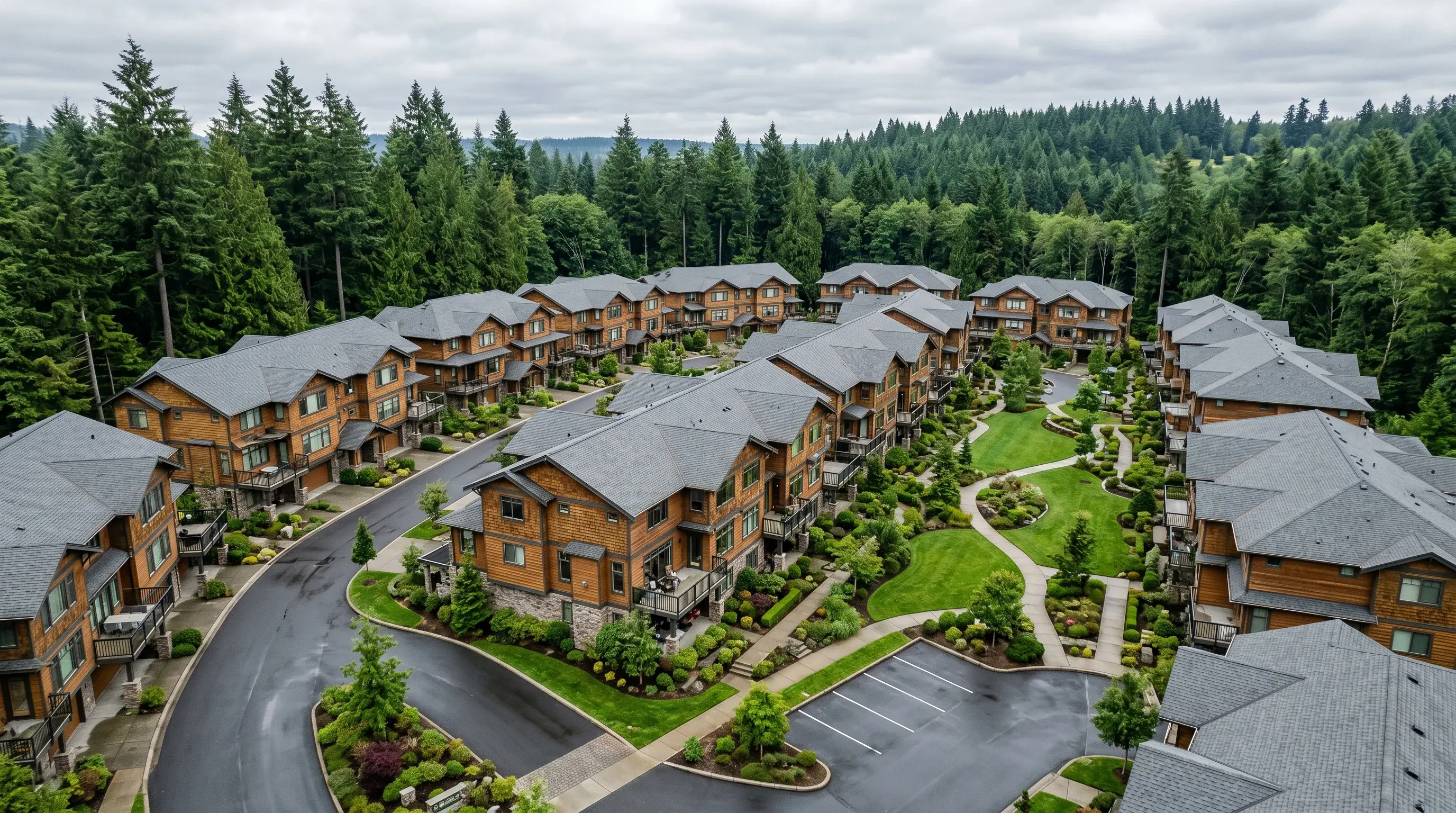
Selling a house with an HOA lien in Washington is doable — even when the homeowners association has already filed a Notice of Default or scheduled a foreclosure sale. The HOA lien attaches to your property and gets paid at closing. The 2026 changes to Washington's common-interest community statutes, including the mandatory mediation rules under RCW 64.90, actually give Washington homeowners more leverage and more time than they had two years ago.
This guide walks through every path available to a Washington homeowner facing an HOA lien in 2026: how the lien is calculated and paid at closing, what the new foreclosure mediation rules require, when super-priority kicks in, how to negotiate down attorney fees, and how a cash sale in Seattle, Tacoma, Olympia, or Bellingham can close before the HOA's foreclosure sale date.
We cover real dollar scenarios for a $4,500, $18,000, and $42,000 HOA balance so you can see exactly what hits the closing statement and what lands in your pocket.
How an HOA Lien Works in Washington
Every condominium and most planned communities in Washington operate under recorded covenants, conditions, and restrictions (the CC&Rs) that obligate owners to pay regular assessments, special assessments, and certain fines. When you fall behind, the HOA's collection process is governed by one of three statutes:
The statute matters because it controls how the HOA can record a lien, what super-priority the HOA gets over your mortgage, what notices must precede foreclosure, and (since the 2024 amendments) whether mediation is required.
The lien itself is created automatically the moment an assessment becomes delinquent — the HOA does not need to record anything for the lien to exist. Recording a Notice of Lien with the county is a separate step that puts the world (including title companies) on record notice. By the time you reach closing, the title report will show the recorded lien as an exception to clear title, and the HOA will be paid through escrow as part of the closing.
Pro Tip: Pull a current property profile or a preliminary title report before you list. King County, Pierce County, Thurston County, and Whatcom County all post recorded liens to their online recorder portals. Knowing the recorded balance up front lets you request a complete estoppel letter early and avoid the panic-payoff scramble two days before closing.
What the 2026 Foreclosure Mediation Rules Actually Require
The biggest change for Washington homeowners is the foreclosure mediation requirement under RCW 64.90.485 and the 2024-2026 implementing rules administered by the Washington State Department of Commerce.
Before an HOA can file a judicial foreclosure on a homeowner's property for unpaid assessments, the HOA must:
1. Send a 30-day pre-lien notice stating the amount due, a breakdown of charges, the date the lien will be recorded if unpaid, and a notice of the right to dispute the amount. 2. Record the Notice of Lien with the county recorder if the homeowner does not pay or dispute within the cure period. 3. Send a 90-day pre-foreclosure notice that explicitly offers mediation through the Foreclosure Fairness Program or a mutually-agreed neutral mediator. 4. Participate in mediation if the homeowner timely requests it. Mediation must address realistic payment plans, settlement of attorney fees, partial-release scenarios, and (where appropriate) sale options that allow the homeowner to walk away with equity rather than lose it to a foreclosure auction. 5. Obtain a court judgment through a judicial foreclosure proceeding — Washington does not allow non-judicial HOA foreclosure under RCW 64.90.
A homeowner who is current on the mortgage but behind on HOA assessments now has roughly 4 to 6 months from the first 30-day notice to either cure, mediate, or sell. That window is what makes a cash sale a realistic alternative to losing the property at auction.
The Northwest Justice Project publishes free homeowner-rights resources that explain the mediation request process step by step, and the Department of Commerce maintains a list of approved mediators with sliding-scale fees.
Where Mediation Goes Wrong
Mediation is not a silver bullet. The HOA still controls whether to settle, and a board that has already authorized litigation often will not budge without a credible alternative on the table.
The mediations that produce the best outcomes are the ones where the homeowner brings a written backup plan — typically a signed cash offer that closes within 30 to 45 days. Boards and their collection attorneys will frequently waive 40 to 60 percent of the attorney-fee component when they see certain proceeds at a known closing date, because the alternative (auction proceeds minus their own fees, with no guarantee of full recovery) is worse for the association.
Super-Priority — How Much of the HOA Lien Gets Paid Before the Mortgage
This is the part most Washington homeowners (and frankly, a surprising number of real estate agents) get wrong.
Under RCW 64.34.364 for condominiums and RCW 64.90.485 for WUCIOA communities, the HOA has a super-priority lien for up to 6 months of regular assessments that takes priority over a recorded first mortgage. Everything else — late fees, attorney fees, special assessments, fines — sits behind the mortgage in priority.
That distinction matters enormously at closing.
| Charge type | Priority over first mortgage? | Example dollar amount | |---|---|---| | 6 months of regular assessments | Yes (super-priority) | $300/mo dues × 6 = $1,800 | | Special assessments | No | $5,000 capital project assessment | | Late fees and interest | No | $400 | | Attorney fees | No | $4,500 | | Recording and collection costs | No | $300 |
In a normal sale closing where the property has equity, this priority order does not change anything practical — every lien gets paid, the mortgage gets paid, and the seller takes the remainder. The priority only matters when proceeds run short or when the property goes to foreclosure auction.
But there is one place this matters at sale closing: if you are short on equity and need to negotiate, the non-super-priority portion is the part the HOA is most willing to discount, because they know that portion has weak collection leverage if the mortgage forecloses first.
Path 1 — Full Payoff at Closing (Most Common)
If your home has enough equity to cover the HOA balance after the first mortgage and standard closing costs, the lien resolves cleanly at escrow with no negotiation needed.
Here is the workflow:
1. Title company discovers the lien. A preliminary title report ordered after you accept an offer pulls all recorded liens, including the HOA Notice of Lien. 2. Escrow orders an estoppel/payoff letter. The escrow officer contacts the HOA management company (or the HOA's collection attorney if the file is in litigation) to request a payoff valid through the projected closing date. Washington law requires the HOA to provide this within 10 business days of a written request. 3. Payoff is itemized in the closing statement. Delinquent assessments, late fees, attorney fees, recording costs, and per-day accruals each appear as line items. 4. Funds wire to the HOA at closing. The HOA receives payment directly from escrow on closing day. 5. HOA records the lien release. Most management companies record the release within 5 business days of payment. King County and Pierce County recorders process the release in 1 to 3 business days once received.
Dollar Example — $4,500 HOA Lien
| Item | Amount | |---|---| | Sale price | $525,000 | | First mortgage payoff | -$310,000 | | Washington REET (1.28% on $525,000) | -$6,720 | | HOA lien payoff | -$4,500 | | Closing costs (est.) | -$4,800 | | Estimated net to seller | $198,980 |
This is the cleanest path. No mediation, no negotiation, no Form 14135 equivalent — just a payoff line item like any other lien. See our companion REET 2026 cash-seller guide for the current rate tiers.
Path 2 — Negotiated Partial Payoff When Equity Falls Short
When the sale price minus the mortgage and closing costs leaves less than the full HOA balance, you have three negotiating levers.
Lever 1: Attorney fees. This is the largest discount opportunity. HOA collection attorneys typically charge $200 to $375 per hour, and even a modest delinquency case can rack up $4,000 to $8,000 in fees by the time a Notice of Default is filed. The fee portion is the part the board has the most flexibility on, because (1) it sits behind the mortgage in priority, and (2) the attorney would rather collect 60 percent of the bill at a certain closing than 100 percent contingent on a foreclosure auction recovery.
Lever 2: Late fees and interest. CC&Rs typically allow 12 percent annual interest plus per-month late fees. On an 18-month delinquency this can add $800 to $2,500. Boards will often write off the interest accrual past 12 months as part of a clean-payoff settlement.
Lever 3: Special assessments. If a special assessment was levied during your delinquency for a capital project, some boards will agree to defer or pro-rate the assessment in exchange for a confirmed sale closing.
The principal balance of regular assessments is rarely discounted — those are the dollars the HOA actually needs to fund operations.
Dollar Example — $18,000 HOA Lien with Negotiated Discount
| Item | Original | Negotiated | |---|---|---| | Delinquent regular assessments | $7,200 | $7,200 | | Special assessment | $4,500 | $4,500 | | Late fees and interest | $1,800 | $900 | | Attorney fees | $4,000 | $1,800 | | Recording costs | $500 | $500 | | Total HOA payoff | $18,000 | $14,900 |
A $3,100 reduction. On a marginal-equity sale that can be the difference between a closing that funds and a deal that collapses.
The cleanest way to get this approved is a written settlement proposal sent through escrow, addressed to both the HOA management company and their collection attorney, conditioned on a closing date within 30 days. Boards meet monthly — give them enough lead time to vote.
Path 3 — Cash Sale Before the HOA Foreclosure Sale Date
If the HOA has already filed a judicial foreclosure complaint and a sale date has been scheduled, you are on a hard timeline. The auction sale eliminates your equity and triggers a deficiency judgment for any unpaid balance plus the HOA's costs.
A cash sale that closes before the auction date stops the foreclosure entirely and is often the only way to preserve any equity.
The mechanics:
Cash buyers in Washington routinely close on properties with active HOA foreclosure cases. The HOA's collection attorney is generally happy to dismiss the case in exchange for full or near-full payoff at closing — it is a faster, more certain outcome than auction.
This path is also how you avoid the secondary problem of an HOA foreclosure judgment showing up on your credit and on your future seller disclosures. A clean sale shows up as a sale; a foreclosure judgment shows up as a foreclosure for the next 7 years.
Comparison — HOA Lien Sale Paths Side by Side
| Path | Best for | Timeline | HOA negotiation needed? | Net proceeds | |---|---|---|---|---| | Full payoff at closing | Equity covers full HOA balance | Standard 30-45 day close | No | Highest | | Negotiated partial payoff | Marginal equity | 45-60 days (board approval cycle) | Yes (attorney fees, late fees) | Moderate | | Cash sale before foreclosure | Active foreclosure scheduled | 14-21 days | Sometimes (dismissal stipulation) | Equity preserved vs. zero at auction | | Mediation under RCW 64.90 | Pre-lien or pre-foreclosure stage | 60-120 days | Yes (formal program) | Depends on outcome |
What HOA Liens Look Like by County
The recording mechanics and county processing speeds vary across Washington's metropolitan markets. We work with sellers across the I-5 corridor and Bellingham, and the typical patterns are consistent.
If your property is in one of these counties and you want a no-obligation cash-offer estimate that includes the HOA lien payoff modeled into the net, our team handles the estoppel request and the payoff math as part of the offer.
Stopping an HOA Foreclosure — Action Steps
If you have received a 30-day pre-lien notice or a 90-day pre-foreclosure notice, here is the sequence that protects your equity:
1. Pull the recorded documents. Get copies of every recorded notice from the county recorder. You need to verify the HOA actually followed RCW 64.34, RCW 64.38, or RCW 64.90 procedures — defects in the notice process can be a defense. 2. Request an itemized estoppel letter in writing. The HOA must respond within 10 business days. Keep a date-stamped copy. 3. Decide your timeline. If you are within the 90-day mediation window, request mediation in writing through the Foreclosure Fairness Program. If you are past that window, focus on a sale closing. 4. Get a written cash offer. A signed offer with a hard closing date is the single best leverage point in any HOA negotiation, and it is also a backup plan if mediation does not produce a workable payment plan. 5. Order the title report. Knowing every other lien on the property (mortgage, IRS, property tax, mechanics liens) lets you and your attorney model what actually nets to the HOA at closing. 6. Deliver a settlement proposal. Send the proposal to the HOA management company and their collection attorney 21 to 30 days before the proposed closing date.
Skipping any of these steps usually costs money. The single biggest mistake we see is homeowners waiting until 7 to 10 days before the auction to start the process — at that point the cash sale window is too tight and the HOA's negotiating posture hardens.
Related WA Lien Situations
HOA liens often stack with other distressed-seller situations. If your property has more than one issue, these guides cover the interactions:
What to Do Today If You Have an HOA Lien on Your Washington Home
If the lien is recorded but no foreclosure is filed yet, you have time. Pull the recorded documents, request an estoppel letter, and decide whether you are curing, refinancing, or selling.
If you have received a 90-day pre-foreclosure notice, the clock is running but you still have leverage. Mediation is on the table, and a written cash offer changes the negotiating posture significantly.
If a foreclosure sale date has been set, you are in the cash-sale window. A 14 to 21 day close stops the auction, pays the HOA, and preserves whatever equity is in the property.
The single common thread across all three is that the math should be modeled before any decision is made. We model HOA payoffs, mortgage payoffs, REET, and net proceeds for Washington homeowners every week — including for properties with active foreclosure filings — and the offer comes with the payoff schedule attached so there are no surprises at the table.
If you want a no-obligation estimate that includes your HOA lien situation, reach out and we will run the numbers within one business day.
---
Sources: Washington State Legislature (apps.leg.wa.gov), RCW 64.34, RCW 64.38, RCW 64.90; Washington State Department of Commerce Foreclosure Fairness Program; Washington Realtors 2026 Distressed Sales Report; Northwest Justice Project homeowner rights resources.