Capital Gains Tax on Selling a House in Washington (2026)
Capital gains tax selling house Washington — Section 121 $250K/$500K exclusion, why WA's 7% tax excludes real estate, stepped-up basis on inherited homes.
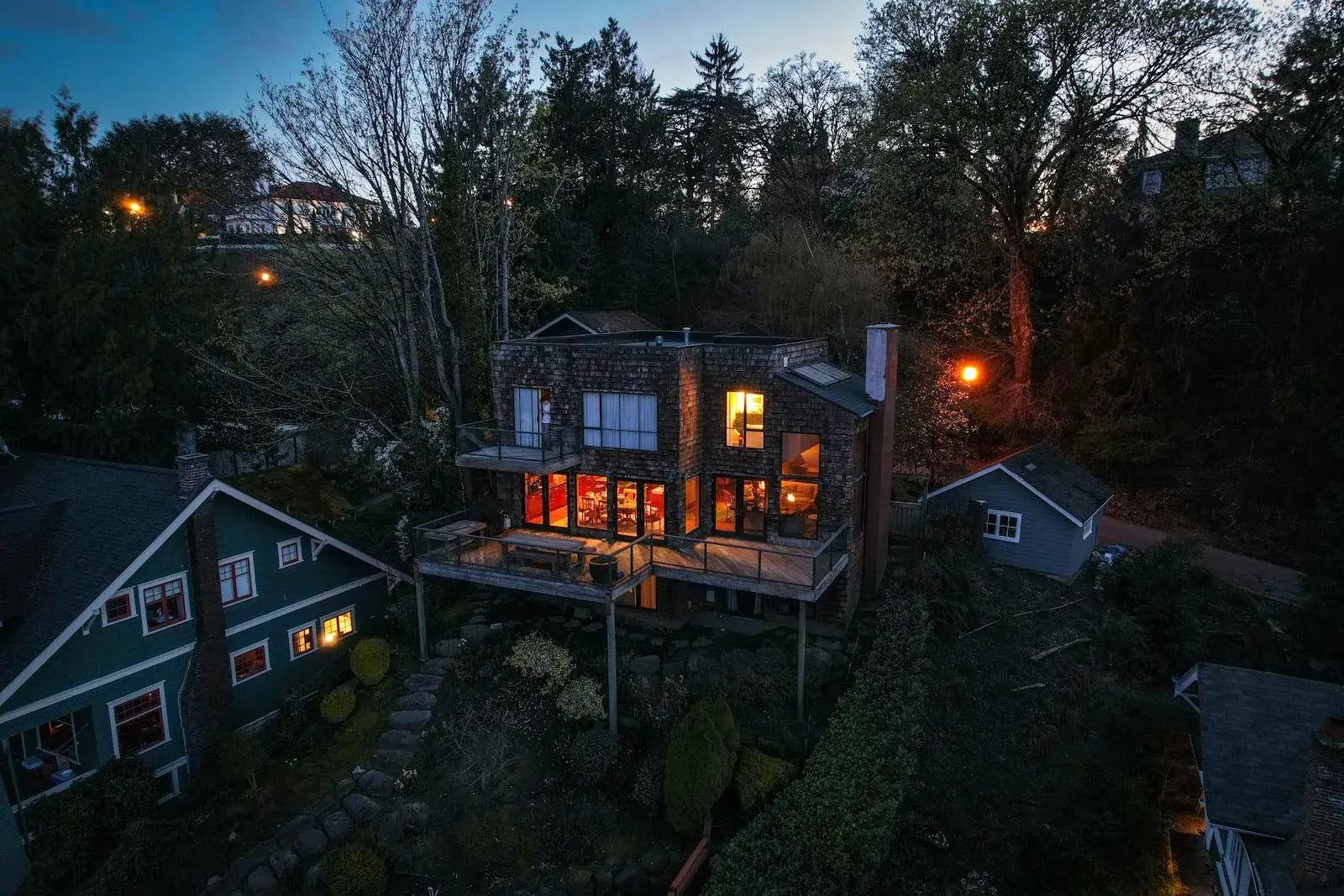
Most Washington home sellers pay zero federal capital gains tax due to Section 121, and zero state tax because Washington's 7% capital gains tax explicitly excludes real estate. A married Seattle couple excludes the first $500,000 of gain under IRC §121; a single filer excludes $250,000. On top of that, RCW 82.87.030 lists "real estate" as one of the asset categories the state's 7% tax does not apply to. The two layers combined mean the typical Washington home sale produces no income tax bill, federal or state.
This guide walks through how that math works in 2026: the Section 121 ownership and use tests, the partial exclusion exceptions, the stepped-up basis rule on inherited Washington homes, the depreciation recapture trap on former rentals, and the common confusion between Washington's 7% capital gains tax (which excludes real estate) and Washington REET (which applies to every sale).
> Important: This guide explains the 2026 framework in plain language but is not legal or tax advice. Confirm rules at IRS Pub 523 and the WA DOR capital gains FAQ, and consult a Washington-licensed CPA before relying on any number in your tax return.
The Short Version — 2026 Capital Gains Tax on a Washington Home Sale
The compressed version every Washington seller should know:
What Capital Gains Tax Is — and What It Is Not
Capital gains tax is a federal income tax on the profit from selling a capital asset (including real estate). It is calculated on your gain — sale price minus cost basis (purchase price plus improvements minus depreciation) — not on gross sale price. Long-term gains (held over one year) are taxed at preferential federal rates of 0%, 15%, or 20%. Short-term gains (under one year) are taxed as ordinary income up to 37%.
For Washington home sellers, three different taxes get bundled in casual conversation:
The first two get confused constantly. Our Washington REET cash sellers guide covers REET in detail; this guide focuses on the income tax side.
Pro Tip: Don't Confuse REET with Capital Gains
If a tax advisor or cash buyer says "you'll owe state tax on your home sale," ask which tax. They mean REET — calculated on gross price, paid at closing by escrow. Washington's 7% state capital gains tax does not touch real estate sales at all.
Federal Section 121 — The Primary Residence Exclusion
The single most powerful rule for ordinary homeowners is the Section 121 exclusion, codified at IRC §121 and detailed in IRS Publication 523. It excludes up to $250,000 of capital gain (single filer) or $500,000 (married filing jointly) from federal income tax on the sale of a principal residence. The exclusion is permanent — not a deferral.
The Two Tests You Must Meet
Both tests must be satisfied for the same property within the 5-year period ending on the sale date:
1. Ownership test. Owned the home for at least 24 months in the 5 years before sale (need not be consecutive). 2. Use test. Used it as your principal residence for at least 24 months in the same 5-year window.
For married couples to claim the full $500,000 exclusion: either spouse must meet ownership, both spouses must meet use, and neither used the exclusion on another sale in the prior 2 years. If only one spouse meets the use test, the couple gets the $250,000 single-filer exclusion.
"Principal residence" is fact-based — Pub 523 looks at where you spend most of your time, your driver's license, voter registration, tax returns, family location, and job. Most Washington homeowners have only one home and the question is moot.
Capital Gains Math — Two Real Washington Examples
Single filer, Seattle. A homeowner bought a Wallingford bungalow in 2010 for $375,000, added $70,000 in capital improvements (kitchen, roof), and sells in 2026 for $850,000 with $73,000 in selling costs. Amount realized: $777,000. Adjusted basis: $445,000. Capital gain: $332,000. Section 121 excludes $250,000, leaving $82,000 taxable. At 15%, federal tax is roughly $12,300. Washington state: $0. REET (separate): about $13,829, paid at closing.
Married couple, Bellevue. Bought in 2008 for $620,000, added $80,000 in improvements, sell in 2026 for $1,650,000 with $145,000 in selling costs. Amount realized: $1,505,000. Adjusted basis: $700,000. Capital gain: $805,000. The married $500,000 exclusion leaves $305,000 taxable. At 20%, federal tax is roughly $61,000, plus a possible 3.8% Net Investment Income Tax (NIIT) of about $11,600 if MAGI exceeds the $250,000 threshold under IRC §1411.
Partial Exclusion — When You Sell Before Meeting the 2-Year Tests
IRC §121(c) and Treas. Reg. §1.121-3 allow a partial exclusion when a qualifying hardship forces an early sale:
The partial exclusion is days owned and used ÷ 730 × the maximum. A couple who lived in a Seattle home for 365 days before a 60-mile job relocation gets 365/730 × $500,000 = $250,000 of exclusion.
| Reason for Early Sale | Qualifies for Partial Exclusion? | |---|---| | Job change 50+ miles | Yes | | Job change less than 50 miles | Generally no | | Major medical event | Yes | | Divorce/legal separation | Yes | | Death of household member | Yes | | Twins, triplets, more children | Yes (multiple births) | | Voluntary lifestyle change | No | | Sold to capture a market peak | No | | Spouse military deployment | Yes (under HEART Act extension) |
For sellers forced out by a job change, our job relocation Seattle cash sale guide covers the partial-exclusion math and the timeline of a 14-day cash close.
The 2-Year Look-Back Rule
Section 121 cannot be used on more than one home sale every 2 years. A couple who sold a Seattle home in March 2025 and used the $500,000 exclusion cannot use it again on a Tacoma sale before March 2027 (absent a hardship). House hackers and frequent movers hit this rule constantly.
Washington's 7% Capital Gains Tax — Why It Does Not Apply to Your Home
Washington enacted a 7% excise tax on certain long-term capital gains effective January 1, 2022, codified in Chapter 82.87 RCW. It applies to long-term gains over an indexed annual threshold (about $270,000 for tax year 2024, indexed under RCW 82.87.040) on stocks, bonds, mutual funds, business interests, and digital assets.
What Is Excluded from the Tax
Under RCW 82.87.030, real estate is excluded — primary residences, second homes, vacation homes, rentals, raw land, and commercial property. Other excluded categories include retirement accounts, livestock used in farming, qualified timber, commercial fishing privileges, and goodwill from a qualified family-owned small business.
The Department of Revenue confirms in its capital gains tax FAQ that "the sale of real estate is not subject to the Washington capital gains tax." Sellers do not file any state capital gains return for a real estate sale.
Why the Confusion Exists
The state capital gains tax was a contested ballot issue that survived a constitutional challenge at the state Supreme Court in Quinn v. State (2023). National headlines reported "Washington enacts capital gains tax" without noting the real estate carve-out, and stale articles still imply it covers home sales. It does not.
Washington has no state income tax on individuals. The entire tax stack on a Washington home sale: federal capital gains tax on gain above the Section 121 exclusion (often $0), federal 3.8% NIIT if applicable, Washington REET on gross price, and property tax prorations. No state income tax line.
Stepped-Up Basis on Inherited Washington Homes
Inherited home sales are one of the most common scenarios we handle at Northwest Cash Offers. The stepped-up basis rule is the single most important tax concept for an heir — and the one most often misunderstood at the closing table.
How the Step-Up Works
Under IRC §1014, when you inherit property, your cost basis is stepped up (or, in rare cases, stepped down) to the fair market value of the property on the decedent's date of death. The decedent's purchase price, improvements, and depreciation history are all irrelevant to the heir.
FMV at date of death is established by a written appraisal from a licensed Washington appraiser. The appraisal is part of the estate's records and carries into the heir's basis when the property transfers out of probate.
Real-World Example — Seattle Family Home
A Seattle parent bought a Beacon Hill home in 1985 for $80,000 and dies in 2026 when the home is worth $850,000. An adult child inherits through probate. The child's basis is $850,000 — the FMV on the date of death. The parent's $80,000 purchase price and $40,000 of improvements over the years are irrelevant to the heir.
If the child sells six months later for $880,000 with $65,000 in selling costs, the gain is $880,000 - $65,000 - $850,000 = a $35,000 capital loss, not a gain. Federal capital gains tax: $0. (Whether the loss is deductible depends on whether the property was held for personal vs. investment use after inheritance — run that question past a CPA.)
For the full probate-plus-sale workflow, see our Washington probate sale guide and inherited Washington house guide.
Long-Term Holding Period Is Automatic
Under IRC §1223(9), any gain on inherited property is treated as long-term regardless of how long the heir actually owns it. An heir who sells 30 days after inheritance still gets the preferential 0%/15%/20% federal long-term rates, not short-term ordinary income rates — a major advantage for heirs converting an inherited home to cash quickly.
Washington Community Property Double Step-Up
Washington is a community property state under RCW 26.16. When one spouse dies, the surviving spouse gets a full step-up on the entire property — not just the deceased spouse's half. Common-law (separate property) states only step up the deceased spouse's half, leaving the survivor with the original basis on their share.
A Seattle couple who bought a home in 1990 for $200,000 and held it as community property — when one spouse dies in 2026 with the home worth $1,200,000, the survivor's basis steps up to $1,200,000 on the entire home. Selling for $1,250,000 a year later produces only $50,000 of gain, easily within the $250,000 single-filer exclusion. Federal tax: $0.
The double step-up is one of the most valuable estate planning tools in Washington. Couples who hold real estate as community property at death often eliminate decades of appreciation from family tax exposure entirely.
Pro Tip: Get the Date-of-Death Appraisal Done Promptly
The stepped-up basis is only as defensible as the documentation behind it. Order a date-of-death appraisal from a licensed Washington appraiser within 6 months of death — appraisals can be done retroactively, but the closer to the actual date, the cleaner the audit defense. Cost runs $400 to $700 in the Puget Sound area.
Edge Cases and Common Traps
Section 121 is generous but narrow. Several common Washington scenarios fall outside it.
Vacation Homes and Second Residences
Section 121 only applies to a principal residence. A vacation home in Leavenworth, a beach cabin on Whidbey Island, or a ski condo at Crystal Mountain does not qualify even if owned for decades. Sale produces fully taxable capital gain at federal long-term rates (0%/15%/20%). One exception: if you converted the second home to a primary residence and lived in it as your main home for at least 24 of the 5 years before sale, a partial Section 121 exclusion may apply under the "non-qualified use" rules of IRC §121(b)(5).
Rental Properties — Depreciation Recapture and 1031 Exchange
A rental that was never your primary residence does not qualify for Section 121. Two things happen on sale: (1) capital gains tax on the gain at 0%/15%/20%, and (2) depreciation recapture under IRC §1250 at a maximum rate of 25% on the depreciation portion. The IRS recaptures depreciation "allowed or allowable" — meaning even if you forgot to claim it, you still owe recapture as if you had. A landlord who owned a Tacoma duplex for 20 years and took $4,200 a year in depreciation has $84,000 of recapture exposure.
The most common way to defer both is a 1031 like-kind exchange — selling the rental and rolling proceeds into another investment property within strict timelines (45 days to identify, 180 days to close). Our out-of-state landlord rental sale guide and rental with tenants guide cover the 1031 mechanics for Washington landlords.
Converting a Rental Back to a Primary Residence
Living in a former rental for at least 2 years before sale unlocks a partial Section 121 exclusion. IRC §121(b)(5) splits gain into qualified use (primary residence after 2009 or any time before 2009) and non-qualified use (rental or vacation use after 2009). A Tacoma landlord who rented from 2010-2022 and lived there from 2022-2026 has 12 years non-qualified, 4 years qualified, of 16 total — only 25% of gain qualifies for Section 121. The rest is fully taxable, plus depreciation recapture.
Short-Term Gains and Property Flipping
If you owned and sold within one year, the gain is short-term and taxed at ordinary income rates — up to 37% federally. Section 121 cannot apply (the 2-year ownership test fails). Property flippers also risk self-employment tax if the activity rises to a "trade or business" level.
Gifts of Real Estate Before Sale
Gifting a Washington home to children before sale usually backfires. Gifted property carries over the donor's original cost basis under IRC §1015 — the recipient does not get a stepped-up basis. Inheritance after death gets the full IRC §1014 step-up instead. For appreciated property, holding until death almost always beats gifting during life on income tax alone — but estate planning involves more than income tax, so consult an estate attorney first.
Calculating Your Cost Basis — What Counts and What Doesn't
The Section 121 exclusion only matters if your gain (sale price minus basis) is positive. Maximizing basis legally lowers gain — IRS Publication 551 covers the rules in detail.
Items that increase basis: original purchase price, buyer-paid closing costs at purchase, and capital improvements with a useful life over one year — kitchen remodels, roofs, additions, HVAC, foundation repair. Special assessments for local improvements also count.
Items that decrease basis: depreciation taken or allowable on rental periods, insurance reimbursements for casualty losses, and certain energy-efficiency tax credits.
Common mistakes that do not increase basis: routine repairs (paint, plumbing, appliance replacement), mortgage interest, property taxes, utilities, HOA dues, and insurance. Per IRC §263 and the tangible property regulations-3), work that betters, restores, or adapts the property is a capital improvement; routine maintenance is a repair.
Selling costs reduce amount realized, not basis — but the effect on taxable gain is the same. On a $850K Seattle sale, selling costs run $65K to $85K (commission + REET + title/escrow). That is real money coming off the gain calculation.
How to Avoid Capital Gains on a Washington Home Sale
For most Washington sellers, "avoiding capital gains" is automatic — Section 121 plus the state's real estate carve-out from the 7% tax means there is no income tax to avoid. For larger gains, the legitimate strategies:
1. Meet the 2-year ownership and use tests fully — waiting 6 months may save five figures. 2. Both spouses meet the use test for the full $500K exclusion. 3. Document every capital improvement (receipts, invoices, photos) — most sellers underclaim basis. 4. Use a partial exclusion if you qualify (job change 50+ miles, health, divorce, multiple births). 5. For inherited property, sell near the stepped-up basis to lock in zero or minimal gain. 6. For rentals, 1031 exchange to defer both gain and depreciation recapture. 7. For mixed-use property, maximize qualified-use months under IRC §121(b)(5). 8. Time the sale to a low-income year — the federal long-term rate is 0% for taxable income under ~$48,350 single / $96,700 married (2024 thresholds, indexed).
A soft caveat: tax law changes, and your specific facts matter more than any guide. Run any large-gain scenario by a Washington-licensed CPA before closing.
What Forms You Actually File
Reporting depends on whether the title company issues Form 1099-S and whether gain exceeds the Section 121 exclusion.
Form 1099-S is required for most real estate sales but not if all three are true: sale price is $250,000 or less single / $500,000 or less married, the seller signs a Section 121 certification at closing, and the full gain qualifies for Section 121. Most Washington title companies present this certification at closing — sign it and the sale never gets reported to the IRS.
Form 8949 and Schedule D are required if a 1099-S is issued. Form 8949 shows sale price, basis, and gain; the Section 121 exclusion is a negative adjustment in column (g) with code "H" in column (f). Schedule D carries totals to Form 1040.
Form 4797 handles sales of property used in a trade or business (rentals reported on Schedule E). Depreciation recapture flows through Part III; long-term gain goes to Schedule D. The interaction between Form 4797 and Form 8949 for partial-Section-121 sales of converted rentals is complicated — this is where a CPA earns their fee.
State forms: none for Washington real estate sales. The 7% capital gains tax does not apply, and Washington has no other state income tax. REET is filed by the title company on the REET Affidavit — the seller signs but does not file separately. See our Washington REET 2026 guide for affidavit mechanics.
Cash Sales and the Capital Gains Calculation
A cash sale and a traditional listing produce the same capital gains math — Section 121, the Washington 7% exclusion, and stepped-up basis all apply identically. The buyer's source of funds is irrelevant to the tax calculation.
What differs is gross price and selling costs, which feed into amount realized and therefore taxable gain. A cash sale typically generates 8% to 15% below a fully-listed price but eliminates 5% to 6% in commissions, 2 to 4 months of carrying costs, pre-sale repairs, and inspection-renegotiation credits — and closes in 7 to 21 days vs. 30 to 60+.
For sellers with substantial built-up gain, the math often favors the higher-gross listing once the Section 121 exclusion is exhausted. For heirs selling near stepped-up basis or sellers with distressed properties, a cash sale often produces more net cash. Our cash buyer vs iBuyer vs realtor Washington guide breaks down where each path wins on net proceeds.
Common Capital Gains Questions from Washington Sellers
Action Steps Before You List or Accept a Cash Offer
If you are within 6 months of selling a Washington home, work through this checklist:
1. Pull your home's records — original closing disclosure, capital improvement receipts, rental depreciation schedules. 2. Calculate adjusted basis: original price plus improvements minus depreciation. 3. Estimate sale price and selling costs (commissions, REET, title/escrow). 4. Run the gain: sale price minus selling costs minus adjusted basis. 5. Check Section 121 qualification — 24 of last 60 months ownership and use, both spouses for joint filers. 6. Subtract the exclusion ($250K single / $500K married). If covered, federal capital gains tax is $0. 7. For inherited property, get a date-of-death appraisal to lock in the stepped-up basis. 8. For rentals, calculate depreciation recapture exposure (depreciation taken × 25%). 9. Confirm no Washington 7% tax applies — real estate is excluded under RCW 82.87.030. 10. Confirm REET on the gross price — paid at closing by escrow.
If any number comes back uncomfortable, run it past a Washington-licensed CPA before signing. A 30-minute consult is cheap insurance against a five-figure tax surprise.
The Bottom Line for 2026 Washington Home Sellers
The headline for most Washington sellers in 2026 is good news. Section 121 still excludes $250K single / $500K married of primary residence gain. The state's 7% capital gains tax explicitly excludes real estate. Inherited homes get a stepped-up basis that wipes out pre-inheritance appreciation.
The traps are narrow: vacation homes (no Section 121), rentals (depreciation recapture and no Section 121), short-term holds (ordinary income rates), and partial-exclusion situations (prorated by months). Each has a planning path — convert to primary residence, 1031 exchange, hold past one year, document hardship — and a CPA can run the numbers in a single consultation.
If you want to see what your specific sale looks like with REET, capital gains, and net proceeds worked out, request a free cash offer from Northwest Cash Offers — we deliver a preliminary net sheet before you sign anything, with tax line items called out clearly. We close in as few as 7 to 14 days across Seattle, Tacoma, Olympia, Bellingham, Spokane, and most of the Pacific Northwest, with no commissions, no repairs, and no financing contingencies.
Selling a Washington home is rarely "sale price minus mortgage equals cash in hand." Section 121, the state's real estate carve-out, stepped-up basis on inherited property, and depreciation recapture on former rentals all live between those two numbers. The earlier you get them on paper, the cleaner every subsequent decision becomes.